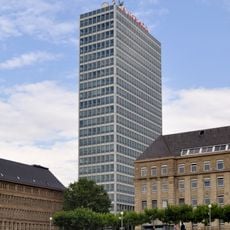
Lichtzeitpegel, Turret clock at Rhine Tower, Germany
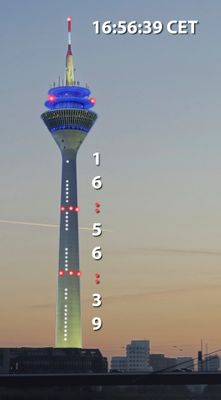
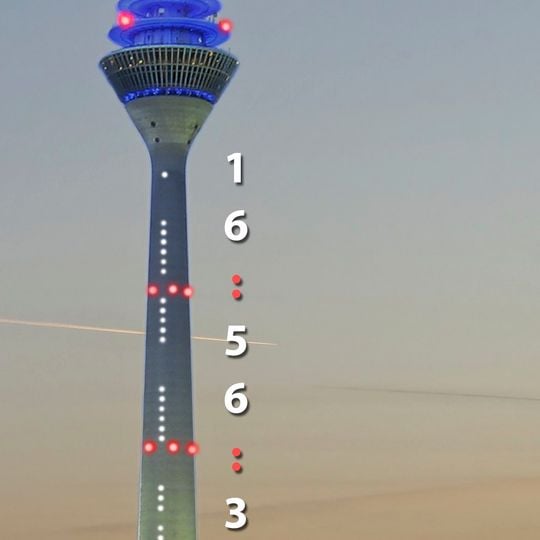
Lichtzeitpegel is a light-based clock installation mounted on the Rhine Tower in Düsseldorf that displays time through illuminated patterns rather than numbers. The system comprises 62 bulbs arranged vertically, with white lights indicating hours, minutes, and seconds in different zones, while separator lights help distinguish each section.
Artist Horst H. Baumann designed this light clock between 1979 and 1982, receiving continuous time signals from the DCF77 longwave transmitter in Germany. The installation emerged as an innovative approach to displaying time through light instead of conventional clock mechanisms.
The light display transforms the tower into a visual timepiece that fascinates passersby at night. People stop to decode the glowing pattern and understand how the lights tell time, making the installation a conversation starter.
The display is most visible after dark when the lights shine brightly against the night sky and the time pattern becomes clear. During daytime, the installation is less obvious since the individual bulbs fade against daylight.
The installation holds recognition as the world's largest binary time display, converting seconds into light combinations through a mathematical system that few visitors immediately understand. This technical singularity makes it a rare example of public art that teaches an unconventional way of reading time.
The community of curious travelers
AroundUs brings together thousands of curated places, local tips, and hidden gems, enriched daily by 92,644 contributors worldwide.