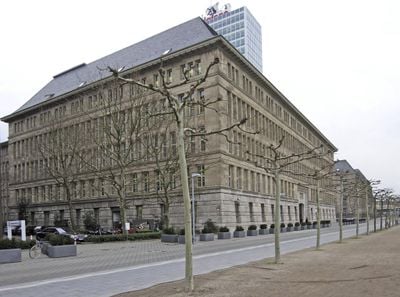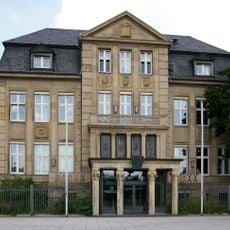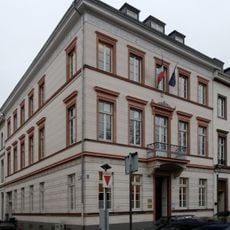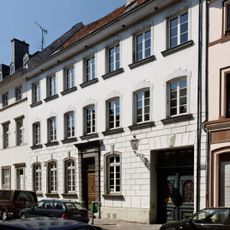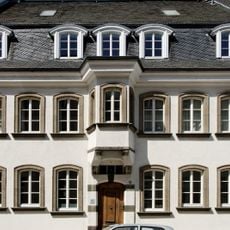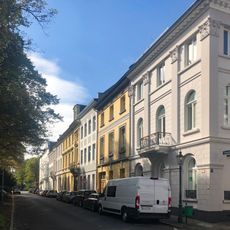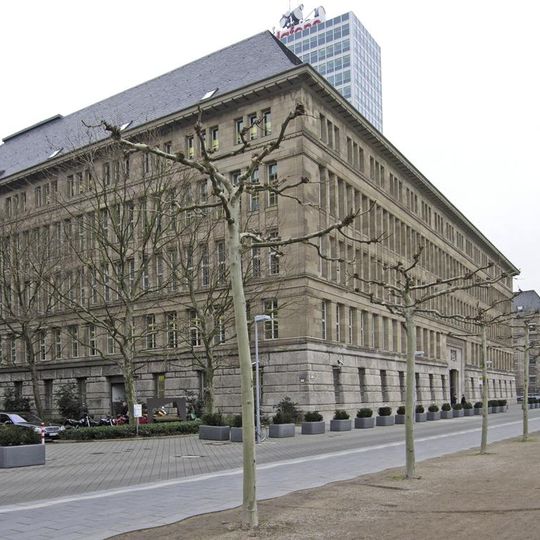
Mannesmann-Haus, Administrative building in Carlstadt district, Düsseldorf, Germany
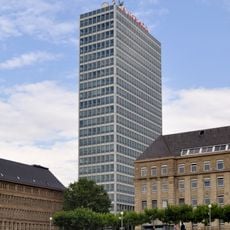
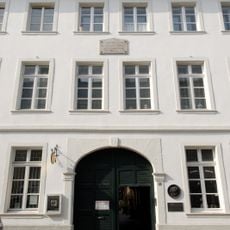
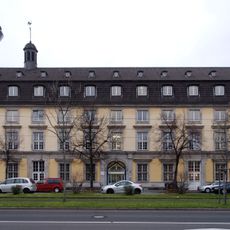
The Mannesmann-Haus is an office building in the Reform Architecture style with a rectangular form and limestone-clad facade. The structure features regularly spaced large windows, stone foundations, and upper floors of tuff stone beneath a sloped roof.
The building was constructed between 1911 and 1912 as an administrative center for Mannesmannröhren-Werke AG, a major industrial company. It later housed French and British occupation forces following World War II.
The building reflects the Reform Architecture movement, which sought to bridge modern design with handcrafted traditions. Its plain facade with uniform window rows demonstrates this philosophy that viewed beauty and functionality as inseparable.
The building is accessible from the street and the exterior facade is clearly visible from Carlstadt district. The interior was fitted with flexible partition walls and standardized office units that still reflect its original industrial office design.
The building brought together four major architects of its era: Peter Behrens, Le Corbusier, Mies van der Rohe, and Walter Gropius all worked on it simultaneously. This rare collaboration made the project an experimental laboratory for modern office design.
The community of curious travelers
AroundUs brings together thousands of curated places, local tips, and hidden gems, enriched daily by 90,798 contributors worldwide.