Rheinknie Bridge, Cable-stayed bridge in Düsseldorf, Germany
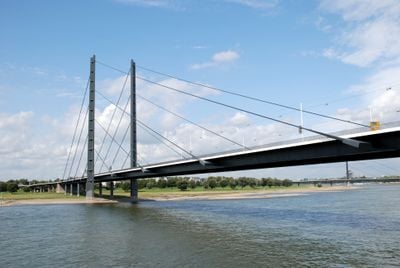
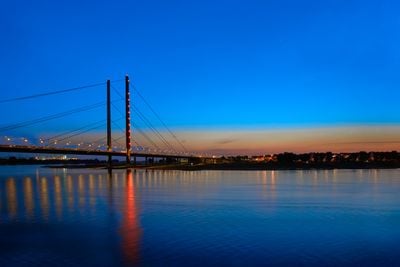
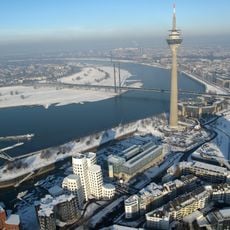
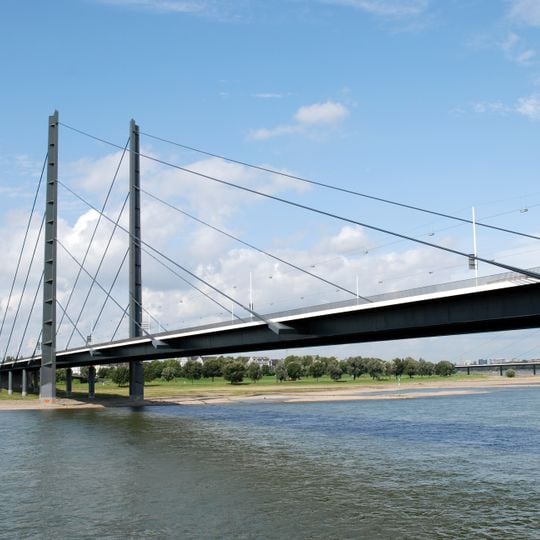
Rheinknie Bridge is a steel cable-stayed structure spanning 1519 meters across the Rhine and supported by angled cables running from a central pylon. The crossing provides six traffic lanes for vehicles plus separate paths for pedestrians and cyclists along both edges.
The structure was designed and completed in 1969 under architect Friedrich Tamms, with construction managed by multiple German engineering firms. Its completion marked a milestone in postwar bridge engineering and supported Düsseldorf's growth as a modern city.
The bridge takes its name from its location at a bend in the Rhine and joins two neighborhoods through modern design that has become part of daily city life. When you walk across it, you notice how pedestrians and cyclists use this crossing every day to move between the two districts.
Pedestrians should use the dedicated walkways on the sides while cyclists have separate lanes that do not mix with foot traffic. Since this is a busy crossing, it works best to walk or cycle outside peak hours when traffic is lighter.
When it opened in 1969, this structure held the world record for the longest span of any cable-stayed bridge at that time, representing a major achievement in engineering. This pioneering role in bridge design is often forgotten by visitors, though it remains important to the history of the craft.
The community of curious travelers
AroundUs brings together thousands of curated places, local tips, and hidden gems, enriched daily by 91,343 contributors worldwide.