Hofgarten, Historic garden in central Düsseldorf, Germany.
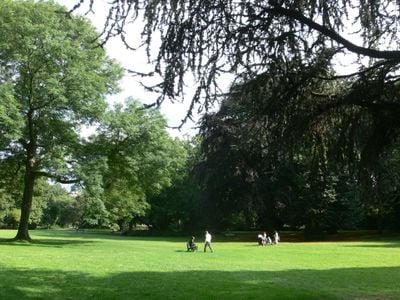
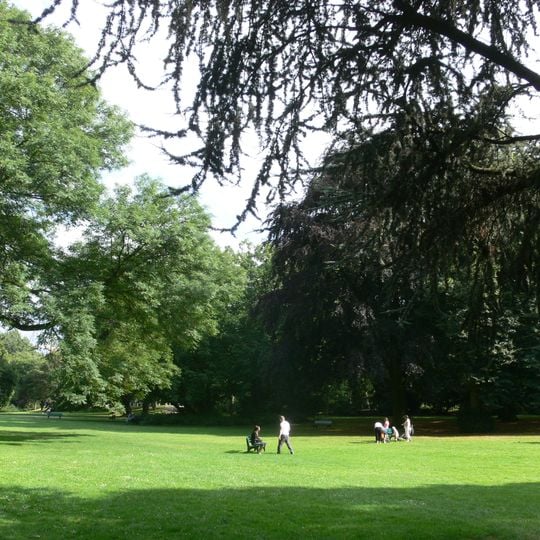
Hofgarten is a large park in central Düsseldorf combining formal French garden design with English landscape elements such as ponds and walking paths. The grounds feature sculptures, fountains, and memorial areas distributed throughout the space.
The Hofgarten began as a princely garden outside the city walls, first documented in 1557 under Duke Wilhelm the Rich. In 1769 Elector Karl Theodor ordered its neglected grounds expanded into a public promenade, with designs by Nicolas de Pigage; the Jägerhofallee was aligned toward St. Andreas. Maximilian Friedrich Weyhe reshaped it as a landscape garden from 1804, and after World War II urban planning brought the last major changes.
The name Hofgarten refers to the princely court garden that once stood outside the city walls. Since 1769 it has been open to the public, and today locals use its lawns, benches and tree-lined avenues for strolling and leisure. The Goltsteinstraße honours Count von Goltstein, who oversaw the garden's expansion.
The park stretches from Schloss Jägerhof and Jacobistraße to Heinrich-Heine-Allee, and from Königsallee to the Ehrenhof on the Rhine. The Düssel was canalised along its southern edge, and the Jägerhofallee runs as the main axis toward the Runder Weiher basin. Benches, statues and vases line the promenade.
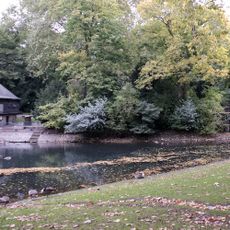
The Runder Weiher pond at the end of the Jägerhofallee received its fountain and Joseph Hammerschmidt's sculpture Jröne Jong in 1900. The park also holds the neo-baroque monument Vater Rhein und seine Töchter, tied to Rhenish Romanticism, alongside sculptures by Henry Moore, Aristide Maillol and Vadim Sidur.
The community of curious travelers
AroundUs brings together thousands of curated places, local tips, and hidden gems, enriched daily by 94,259 contributors worldwide.