Morsum-Kliff, Geological formation in Sylt, Germany.
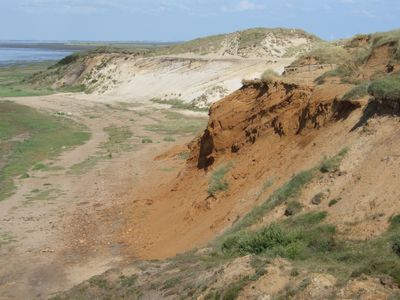
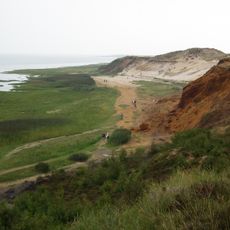
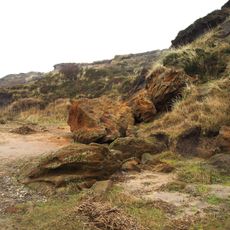
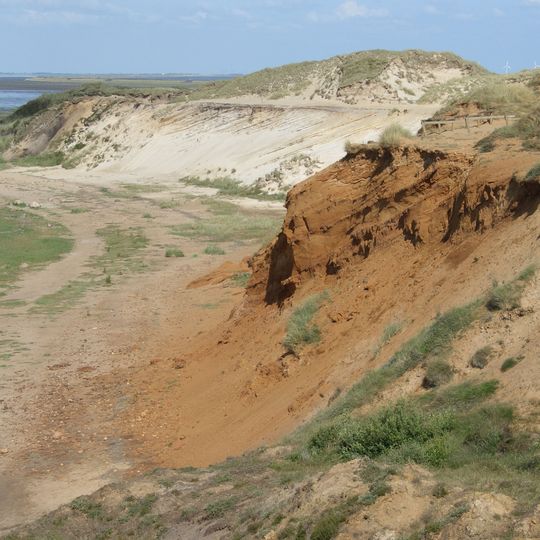
Morsum Kliff is a cliff on the island of Sylt with about 1,800 meters (5,900 feet) of length and roughly 21 meters (69 feet) of height, displaying Earth's history in colored layers. Dark clay, red sand, white kaolin, and yellow-brown material form alternating bands that read like an open geology textbook.
The cliff took its current form during the Saale Ice Age around 150,000 years ago when glacial movements compressed and tilted different rock layers. The eastern section received protection in 1923 after dam construction threatened to damage the coastal area.
The cliff is now a protected nature reserve that draws visitors interested in reading Earth's history through its layers. The colored bands tell the story of different periods when various environmental conditions shaped this land.
You can walk along marked wooden paths that run beside the cliff, allowing views of the colored layers from different angles. Parking and restroom facilities are located near the entrance, making a visit comfortable and straightforward.
The different layers reveal roughly 12 million years of Earth's history, with the red coloring particularly striking and pointing to special depositional conditions. This coloring makes the site a sought-after destination for geology students and amateur rock enthusiasts.
The community of curious travelers
AroundUs brings together thousands of curated places, local tips, and hidden gems, enriched daily by 91,391 contributors worldwide.