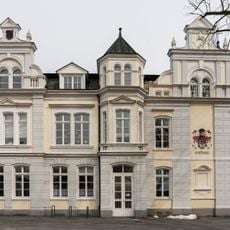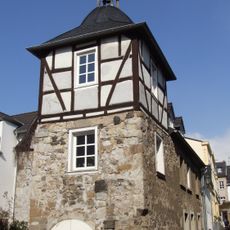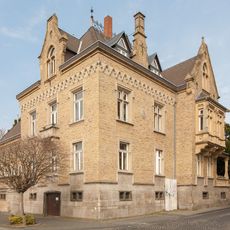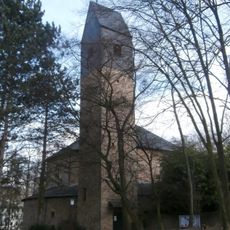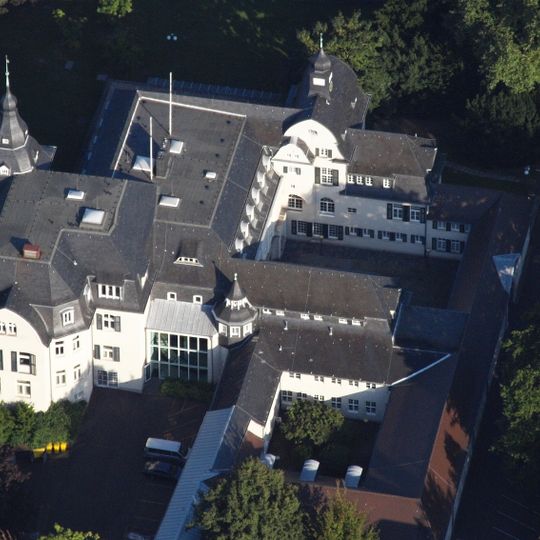
Schloss Deichmannsaue, Palace in Bad Godesberg, Germany
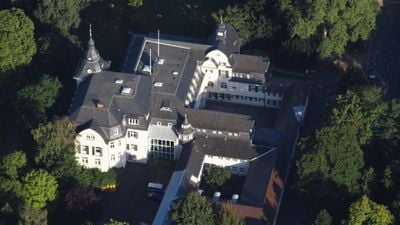
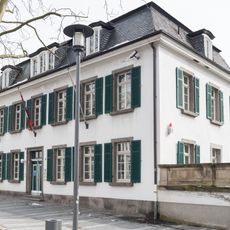
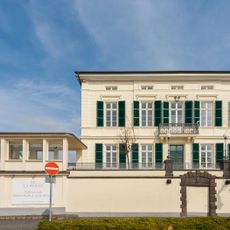
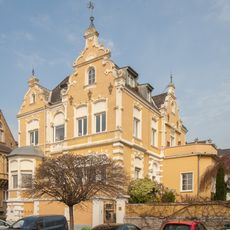
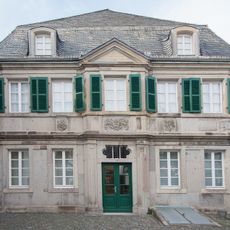
Schloss Deichmannsaue is a palace complex near the Rhine River in Bad Godesberg, constructed with concrete and wooden elements, elevated on pylons to protect against flooding. The building currently houses the Federal Institute for Agriculture and Food following extensive renovation work.
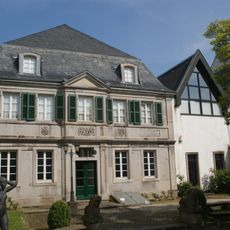
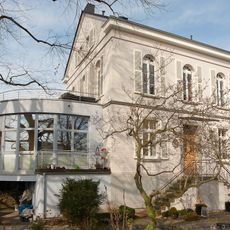
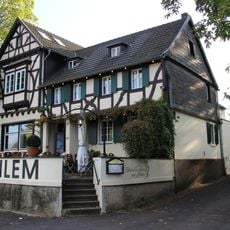
First recorded in 1662 as Auerhof, the estate was purchased in 1836 by the Deichmann banking family from Cologne as a venue for social events. After World War II, it was converted in 1955 into a government facility serving administrative functions.
The palace became a symbol of modern administration after being transformed from a private residence into a government facility. Today, visitors can observe how the grounds blend historical architecture with contemporary administrative functions.
The site sits near the Rhine and features elevated areas designed for flood protection, which affects how the grounds are laid out. Visitors should know that this is an administered facility where access to certain areas may be restricted.
The building was attacked in 1991 by the Red Army Faction, resulting only in property damage with no threat to lives. This incident highlighted that the complex had become a target requiring contemporary security measures.
The community of curious travelers
AroundUs brings together thousands of curated places, local tips, and hidden gems, enriched daily by 90,755 contributors worldwide.