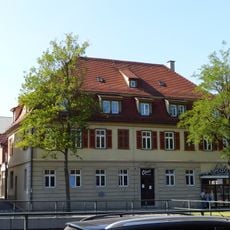
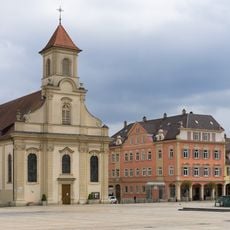
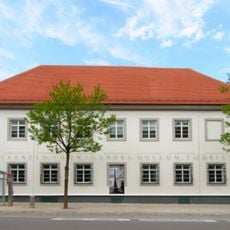
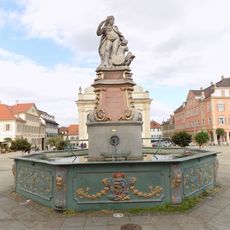
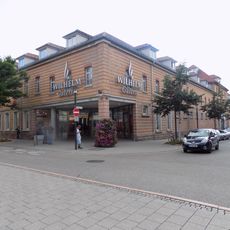
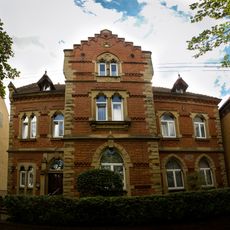
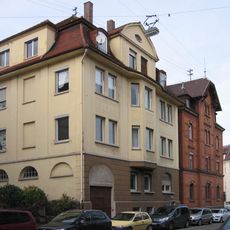
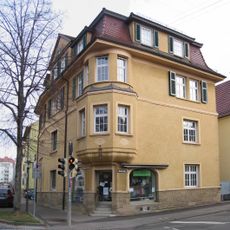
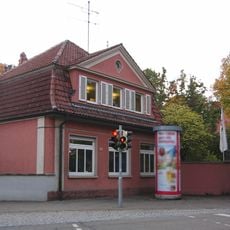
Ludwigsburg Museum, Museum in Ludwigsburg, Germany.
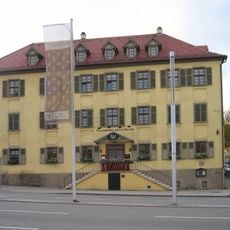
The Ludwigsburg Museum presents the cultural history of the city and its region, showing Ludwigsburg as a residence and centre of the arts and as a garrison and industrial town. Of roughly 25,000 objects held, about 500 are displayed in its rooms. Since 2013 it has shared the MIK building with the tourist information office and the Kunstverein.
The collection traces back to the Historischer Verein Ludwigsburg, founded in 1897 with the aim of gathering antiquities and valuable art objects. Its first exhibition ran from 1 to 9 April 1901 in the Ratskeller and drew King Wilhelm II of Württemberg among visitors. The city took over the collection at the end of 1941, and from 1978 it formed the Städtisches Museum; in November 2012 it was renamed Ludwigsburg Museum and reopened on 12 May 2013 in the MIK.
The museum's name comes from a 2012 city council decision, when it moved into the MIK building and was renamed Ludwigsburg Museum. It shares those rooms with the tourist information office and the Kunstverein. Its puppet collection, acquired from Tony Schumacher in 1934, was thought lost after the war, found in two unlabelled wooden crates and shown again in 1994 after restoration.
The museum sits near the Residential Palace and is easy to reach on foot, with parking available in the surrounding area for visitors arriving by car. Those using public transport will find stations nearby that connect quickly to the building.
The puppet collection of Tony Schumacher, acquired in 1934, was thought lost after the war until it was found in two unlabelled wooden crates; after restoration it went on display again in 1994. A 1994 special exhibition was devoted to it. The museum keeps around 25,000 objects but shows only about 500.
The community of curious travelers
AroundUs brings together thousands of curated places, local tips, and hidden gems, enriched daily by 93,357 contributors worldwide.