Turmburg, castle ruin in Walluf, Germany
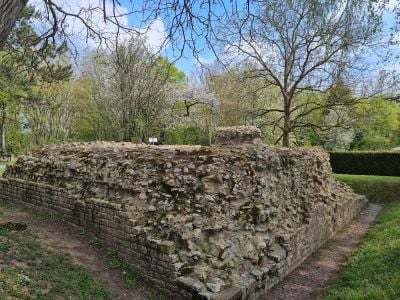
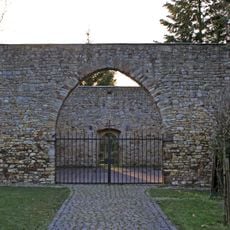
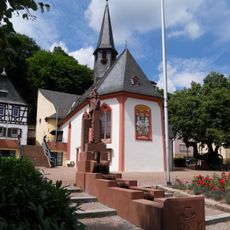
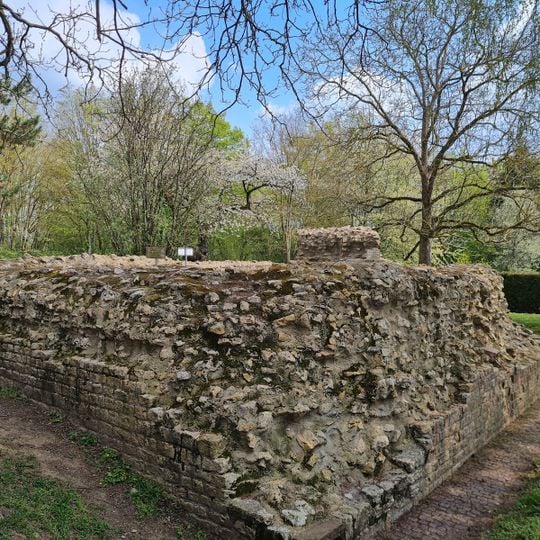
Turmburg is the remnant of a lowland castle beside the Johanniskirche at the edge of Niederwalluf, Hesse. What survives is the base of a tower built of cast masonry on a footprint of 9.60 by 11.60 metres, with walls 2.20 to 2.30 metres thick, surrounded by traces of a moat.
The castle was built around the year 1000 to watch over a Rhine crossing and later gained a residential tower for its owners. After damage around 1200, the site passed to a knight named Heinrich Frank in 1263 and gradually fell into ruin.
The name Turmburg refers to the tower that forms the surviving core of this early Romanesque residence. The site lies beside the Johanniskirche at the Wiesbaden end of Niederwalluf, and the excavated remains were uncovered between 1931 and 1933. Visitors can see the tower's cast masonry and the surrounding ditch traces.
The ground around the ruins is uneven, so wear sturdy shoes and move slowly over the old stones. A short walk from the village takes you to the site, which is easy to reach in most weather.
Visitors often miss that the tower walls were made with a method called cast masonry, which gives the surviving stone a rough, almost poured look. Excavations in the 1930s also uncovered a small space that once served as a bone store, a practical detail rarely seen in castle ruins of this size.
The community of curious travelers
AroundUs brings together thousands of curated places, local tips, and hidden gems, enriched daily by 93,360 contributors worldwide.