Dyckerhoffbrücke, Pedestrian arch bridge in Wiesbaden, Germany
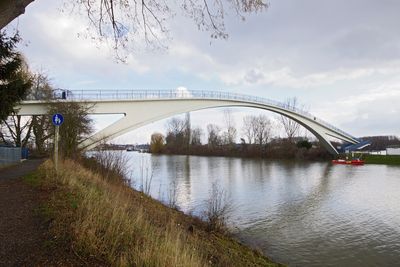
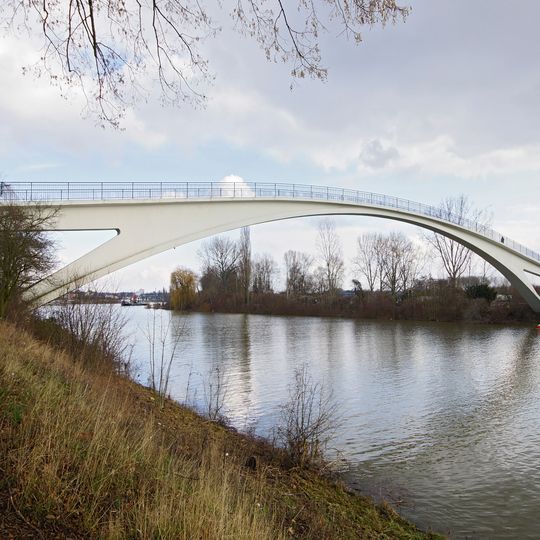
The Dyckerhoffbrücke is a pedestrian bridge in Wiesbaden with a concrete arch system that connects two neighborhoods and is made from prestressed concrete. The structure features prominent arches that distribute weight evenly and enable safe crossing.
The Dyckerhoffbrücke was built in 1967 as a prestressed concrete structure erected by cantilever construction, spanning the Schierstein harbour exit with a 96.40 m arch. It was the first bridge in Germany to use lightweight concrete extensively to reduce loads. Planning began in 1964, when the Dyckerhoff cement works marked its 100th anniversary and donated the bridge together with the city of Wiesbaden.
The bridge is named after the Dyckerhoff cement works, which celebrated its 100th anniversary in 1964 and donated the structure together with the city of Wiesbaden. Its 96.40 m arch crosses the harbour exit of the Schierstein harbour at Rhine kilometre 506.0.
The bridge crosses the harbour exit at Rhine kilometre 506.0, linking the Schierstein harbour banks; the 96.40 m arch is crossed on foot only, so cyclists dismount. The span was built by cantilever method from both sides without temporary supports in the water.
The bridge was the first in Germany to use lightweight concrete on a large scale, cutting the structure's own weight. Dyckerhoff's cement works donated it to the city of Wiesbaden for its 100th anniversary, and planning began in 1964, three years before the 1967 opening.
The community of curious travelers
AroundUs brings together thousands of curated places, local tips, and hidden gems, enriched daily by 94,035 contributors worldwide.