Schierstein Bridge, Road bridge in Wiesbaden, Germany
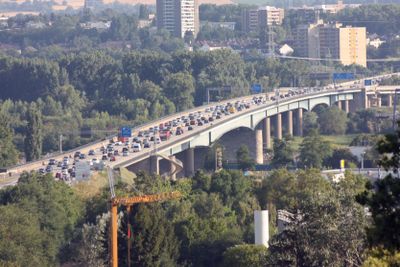
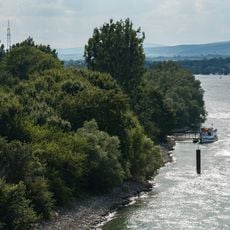
The Schierstein Bridge is a 1,282-meter (4,206 ft) dual structure spanning the Rhine River and connecting Schierstein in Wiesbaden with Mombach in Mainz. It features multiple traffic lanes, wide pedestrian and cycling paths, and provides access points to the surrounding areas, including the nearby Rettbergsaue island.
Built between 1959 and 1962, the original bridge was closed from mid-February to mid-April 2015 after extensive structural damage. Its replacement was built in two halves: the western span opened on 20 November 2017, the eastern on 13 August 2023, and the old structure was demolished from 2017. The total cost reached 252 million euros.
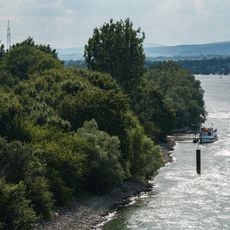
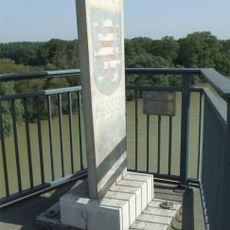
On the deck, a monument by sculptor Raimund Eser marks the border between Rhineland-Palatinate and Hesse, showing both states' coats of arms; it was donated by the William Dyckerhoff Institute of Wiesbaden in 1961. A staircase on the upstream side leads down to Rettbergsaue island, and spiral staircases give pedestrians and cyclists access over the summer dam.
Visitors on foot or by bicycle can use the wide western paths that provide safe crossing options. A staircase offers direct access to Rettbergsaue island and the surrounding green spaces.
The bridge's design capacity was 23,000 vehicles a day, yet planners expected only about 7,100 to use it; today roughly 80,000 cross daily, about three times the design load. The Mombach interchange sits on the bridge itself, and its street lights have stayed dark for cost reasons.
The community of curious travelers
AroundUs brings together thousands of curated places, local tips, and hidden gems, enriched daily by 93,711 contributors worldwide.