Waggonaufzug, A lift for railway cars in Eberswalde, Brandenburg
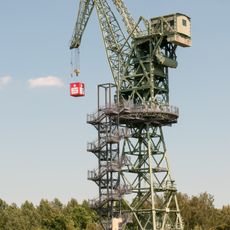
The Waggonaufzug in Eberswalde is a steel hoisting machine that could transport railway wagons between two levels with a height difference of about 6 meters (20 feet). This hydraulic and electric system was built in 1908 and featured counterweights to lift loads up to 25 tons.
The facility was built in 1908 for a factory that had been making nails since the 1870s and became a leading German producer. After closure in 1926, the site was used by the railway, then by Soviet forces after 1945, until the factory was permanently shut down in the 1970s.
The lift developed as part of a factory complex that shaped Eberswalde's identity as an industrial center. Today it stands as a witness to early 20th-century working life and shows how manual labor and machinery worked together.
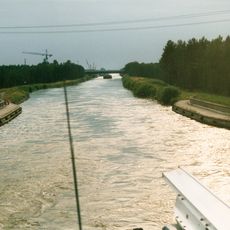
The lift stands at Kupferhammerweg 6/7, bordered by the Finowkanal to the north and the Berlin-Stettiner railway embankment to the east. It is not maintained and no longer usable, so it can only be viewed from outside; the site is not accessible for entry.
The lift's counterweights on both sides, similar to those at the Niederfinow boat lift, could not exactly balance the load, so the drive had to handle the uneven weight distribution itself. Wagons were moved across the factory grounds by horses and ropes, and the transfer downhill took five minutes, uphill fifteen.
The community of curious travelers
AroundUs brings together thousands of curated places, local tips, and hidden gems, enriched daily by 93,361 contributors worldwide.