Volkspark Rehberge, Urban park in Wedding district, Berlin, Germany
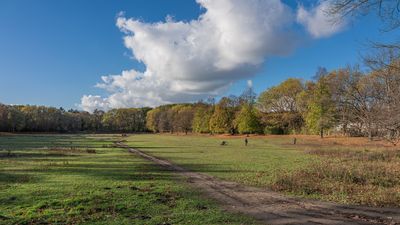
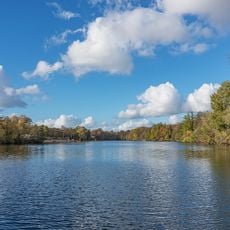
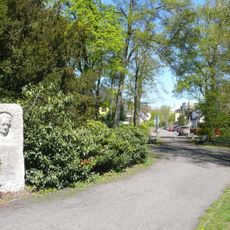
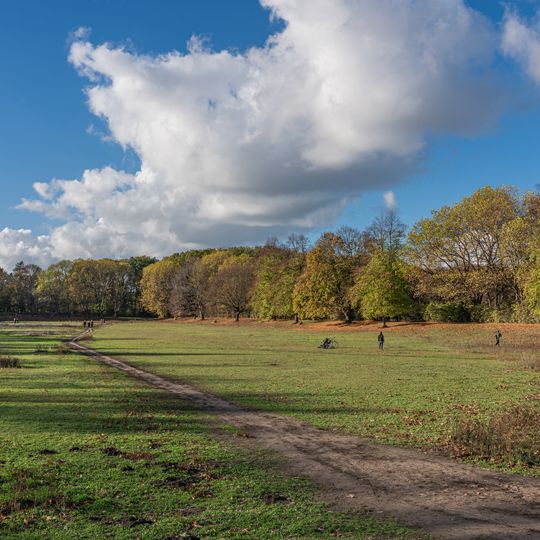
Volkspark Rehberge is a 78-hectare park in Wedding, laid out from 1922 to 1929, with wide meadows, dirt paths and a line of trees along its edge. Its ground is glacial: inland dunes of fine wind-blown sand and the Long Fenn hollow, reshaped into three lakes — Möwensee, Sperlingssee and Entenpfuhl. A toboggan run drops 20 metres, and the Stadion Rehberge lies within the grounds.
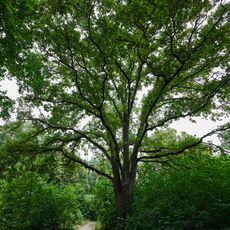
The area lay outside Berlin in the Prussian estate of Plötzensee until 1915. After the First World War, residents stripped the pine and oak woods for fuel, and the exposed sand blew into dunes. In 1922 the city abandoned plans for housing and commissioned city garden director Albert Brodersen to design a public park, laid out between 1922 and 1929.
The park's name comes from the Rehberge, the deer hills that once stood here; the surrounding area was a Prussian estate until 1915. The open-air theatre is one of several facilities laid out when the park was built between 1922 and 1929, alongside animal enclosures and playgrounds. The park borders the Afrikanisches Viertel, a neighbourhood whose street names recall German colonial history.
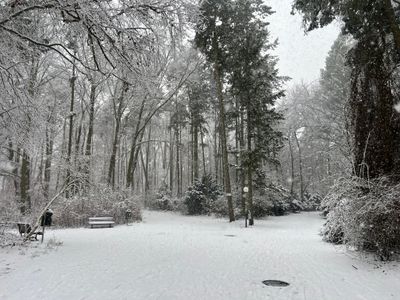
The park lies in Wedding, with the Rehberge U-Bahn station on line U6 close by; the Plötzensee and its green spaces border it to the south-west. Paths for walking and cycling cross the meadows, and a toboggan run drops 20 metres. Parts of the park have been a protected landscape area since 1953.
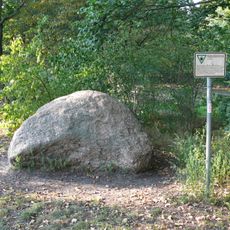
The park features inland dunes and three narrow lakes formed by glacial activity from around 20,000 years ago. This glacial landscape makes it geologically distinct from other Berlin parks in visible ways.
The community of curious travelers
AroundUs brings together thousands of curated places, local tips, and hidden gems, enriched daily by 93,359 contributors worldwide.