Wetterau-Museum, Regional history museum in Friedberg, Germany
The Wetterau-Museum occupies a two-storey building erected in 1882 as municipal horse stables and a trade school, now a listed monument. Its ground floor is largely given to archaeology, while the upper floor holds medieval and modern objects and a section for temporary exhibitions. The entrance is at Haagstraße 16.
The museum's founding dates to shortly before 1900, when numerous Roman-era finds were made in Friedberg and the Friedberger Geschichtsverein was established. It occupied several sites: the Feldwebelbau of the Grand Ducal Palace on Burg Friedberg, from 1901 the Augustinerschule, from 1905 Usagasse 38, and from 1913 the present building, a two-storey former municipal horse stable and trade school built in 1882. The First World War delayed its opening there until 16 May 1920.
The museum is a stop on the Keltenstraße, and its Celtic section, redesigned in 2002, uses regional finds, reconstructions, maps and large photographs to cover house building, crafts, farming, trade, food and religion. A woman's grave from Wölfersheim gives the name to a Bronze Age stage.
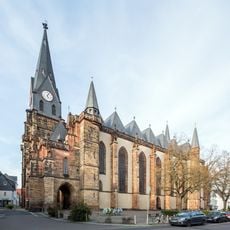
The entrance is at Haagstraße 16, between Haagstraße and Schnurstraße next to the Stadtkirche, a short walk from Friedberg station and the old town. Parking is directly west of the building and in the Alten Bahnhofstraße car park. The Kunstverein Friedberg exhibition rooms and the Wetteraukreis district archaeology office share the same building.
The Roman section displays the Ober-Florstadt coin hoard, 1,136 denarii. It is the museum's best-known find and shows how Roman money circulated in the Wetterau. The hoard is a highlight of the collection, which also holds a Mithras relief and two torchbearers from the Friedberg Mithraeum.
The community of curious travelers
AroundUs brings together thousands of curated places, local tips, and hidden gems, enriched daily by 93,416 contributors worldwide.