Weggental, Baroque church in Rottenburg am Neckar, Germany
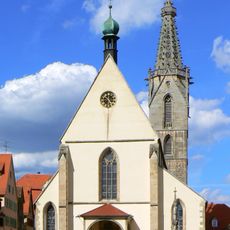
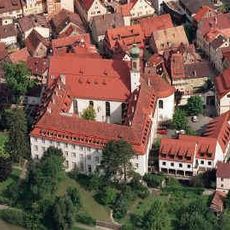
Weggental is a Baroque pilgrimage church built from 1682 to 1695 to the Vorarlberg Minster scheme, probably by Michael Thumb. The interior was completed in the first third of the 18th century, with stucco by Johann Georg Brix in the choir and apse. The high altar, made in Vienna in 1730, was a gift from the Habsburg imperial house.
A wayside shrine with a small Pietà stood here from 1450; a first chapel followed in 1521 and a pilgrimage grew, cared for by the canons of St. Moriz and from 1658 by the Jesuits. The present church was begun in 1682 to the Vorarlberg minster scheme, attributed to Michael Thumb, completed in 1695 and consecrated on 29 October. After the Jesuit order was suppressed in 1773, the town parish of St. Martin took over the pilgrimage again.
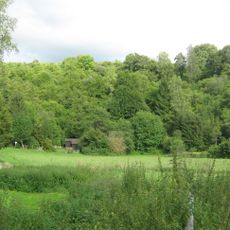
The name Weggental refers to the valley location on the road from Rottenburg to Remmingsheim. Each year from 23 December to Candlemas the Weggentaler Krippe, a nativity scene made by Leopold Lazaro around 1835/1840 for innkeeper Kreszentia Fischer, who donated it to the monastery in 1850, is shown in four presentations. The church is still a pilgrimage site; since 2021 a pilgrimage rector and a pastoral assistant run it, and it is being developed into a centre for family pastoral care.
The building is easy to find in this residential area and can be viewed from the outside. Visitors should note that it still functions as an active church, so timing your visit to avoid services is important.
The high altar, made in Vienna in 1730, was a gift from the Habsburg imperial house. The church also holds the Weggentaler Krippe, a nativity scene created around 1835/1840 by Leopold Lazaro for innkeeper Kreszentia Fischer, who donated it to the monastery in 1850; it is displayed in four scenes from 23 December to Candlemas.
The community of curious travelers
AroundUs brings together thousands of curated places, local tips, and hidden gems, enriched daily by 94,643 contributors worldwide.