Museum Morsbroich, Contemporary art museum in Morsbroich Castle, Leverkusen, Germany.
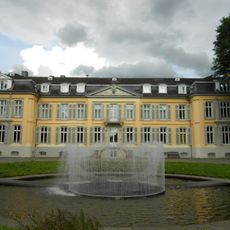
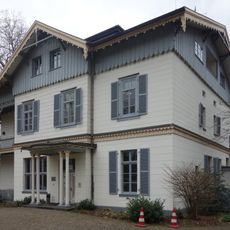
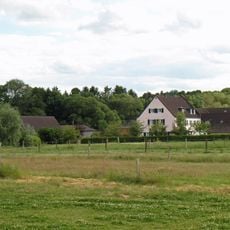
Museum Morsbroich is an art museum housed in an 18th century Baroque palace with extensive collections of modern and contemporary works. The building features multiple galleries within the main castle as well as attached pavilions accessible through manicured grounds.
A castle was first mentioned in 1328 and served as headquarters of the Teutonic Order from 1619; by 1774 it was derelict and was demolished, replaced by the present Baroque palace with an English garden. Two more wings were added in 1885. In 1974 the building was sold to the city of Leverkusen and renovated; on 30 September 1949 the city council had already voted to establish a museum, which opened in January 1951 as the first museum of modern art in post-war West Germany.
The museum opened in January 1951, the first museum of modern art founded in West Germany after the Second World War. Its founding charter, adopted by the city council on 30 September 1949, called for exhibitions of living artists of every tendency, without bias toward any single direction. The city, incorporated only in 1930, used the new museum to break with the rigid outlook of the Nazi years.
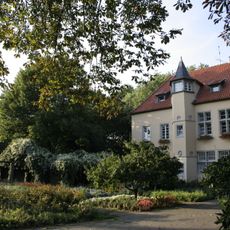
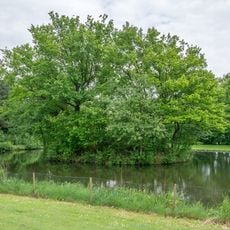
The museum sits just outside the city center but has parking on site and good public transportation links. The grounds are freely accessible, so a walk through the gardens is worthwhile before or after visiting the galleries.
In 1961 the museum held the Morsbroich Art Days, organised by director Udo Kultermann, with Theodor W. Adorno, Max Bense and Frei Otto among the participants. In 1969 it staged, with Düsseldorf dealer Konrad Fischer, one of the first European museum exhibitions of conceptual art, and let each artist occupy a separate room of the Baroque palace.
The community of curious travelers
AroundUs brings together thousands of curated places, local tips, and hidden gems, enriched daily by 93,641 contributors worldwide.