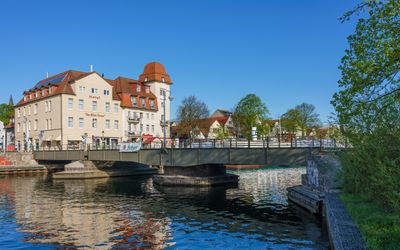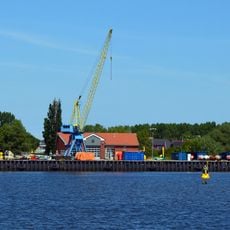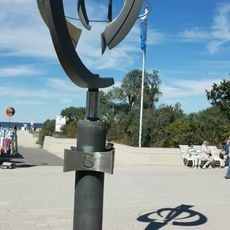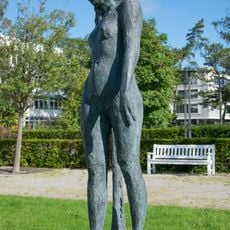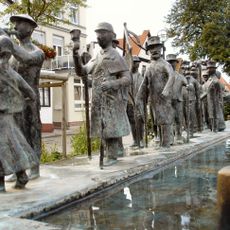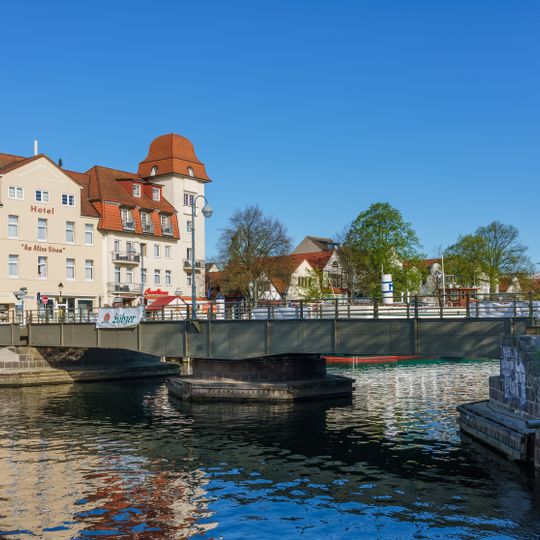
Bahnhofsbrücke Warnemünde, Steel and oak footbridge in Warnemünde, Germany.
The Bahnhofsbrücke is a footbridge made of steel and oak wood that carries pedestrians across the Alter Strom waterway in this seaside resort town. The structure measures about 42 meters long and just over 7 meters wide, featuring a central pivot mechanism that once allowed vessels to pass underneath.
The bridge was built in 1903 and operated for decades as a rotating crossing to allow ships through the waterway. Its mechanical system was replaced in the mid-2000s following damage caused by a passing vessel.
The structure reflects how this coastal town has shaped its relationship with the water and maritime life over time. Walking across it, visitors experience a piece of local identity that connects residential and commercial spaces.
The bridge connects the railway station to the town center and is used regularly by pedestrians, especially during warmer months. Access is straightforward and open at all times, making it easy for visitors to cross without any special arrangements.
The structure weighs around 80 tons and was originally operated by hand to rotate and allow ships through. This manual operation makes it a rare surviving example of an early 20th-century rotating bridge of its kind.
The community of curious travelers
AroundUs brings together thousands of curated places, local tips, and hidden gems, enriched daily by 91,629 contributors worldwide.