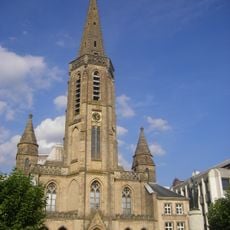
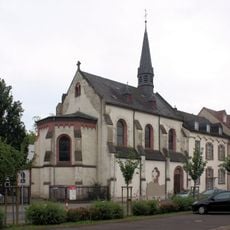
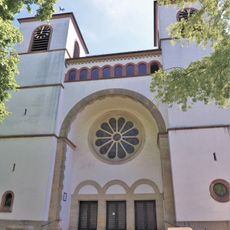
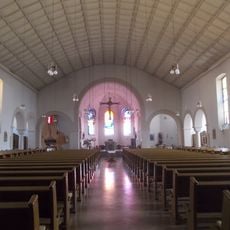
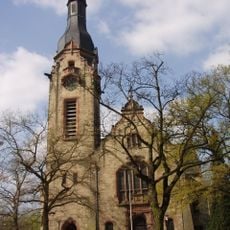
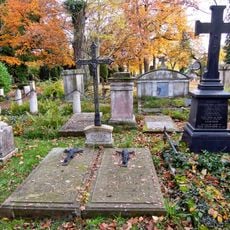
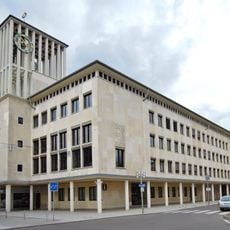
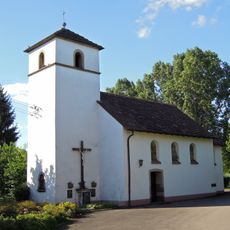
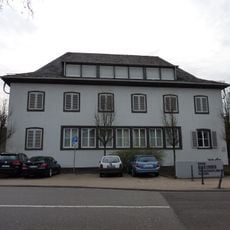
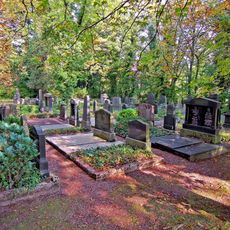
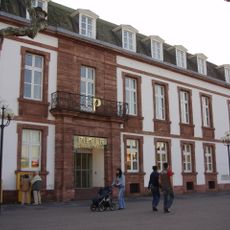
Kloster Fraulautern, Augustinian monastery in Saarlouis, Germany.
Kloster Fraulautern is a former Augustinian convent with a Baroque church situated along the Saar River in Saarlouis. The complex served for centuries as a center of education and spiritual life in the region.
In 1129 the nobleman Adalbert gave his Fraulautern lands to Archbishop Meginher of Trier so that monks from Mettlach Abbey would build a church and monastery; Mettlach hesitated, and Adalbert bought the endowment back for 15 pounds and gave it to Archbishop Albero of Montreuil, who installed Augustinian canons from Springiersbach around 1142. Archbishop Hillin of Falmagne established a noble chapter in 1154, confirmed by Pope Adrian IV on 23 January 1155. Around 1160 Augustinian canonesses took over the house, which was suppressed in the 1790s during the French Revolution.
The name Fraulautern comes from the nuns (Frauen) of the abbey and probably the Celtic word "Lutra" for a marshy stream, first recorded in a 1280 deed. The convent accepted only girls under seven whose noble ancestry was proven back sixteen generations, and from 1249 the pope granted it the right to reject applicants.
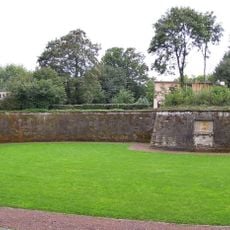
The former abbey buildings stand near the Saar in Fraulautern, now part of Saarlouis, and are used by the Grundschule under the name "Im Alten Kloster". As an active primary school, the interior is not open to casual visitors; view the surviving structure from the street and arrange any access in advance with the school.
The abbey's first convent seal dates from 1225 and shows the Holy Trinity, the patron of the house. Pope Innocent IV granted the convent in 1249 the right to reject applicants, so no one could force a new member on the community. The name Fraulautern comes from the nuns and probably the Celtic word "Lutra" for a marshy stream.
The community of curious travelers
AroundUs brings together thousands of curated places, local tips, and hidden gems, enriched daily by 93,703 contributors worldwide.