Schloss Tullau, Renaissance château in Schwäbisch Hall district, Germany
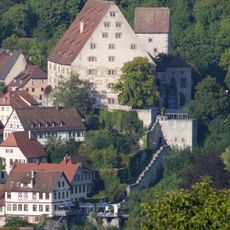
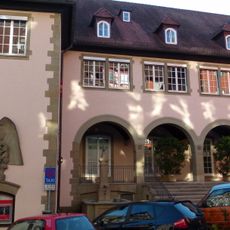
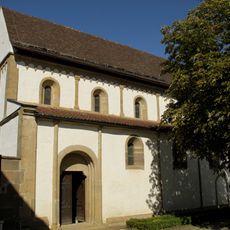
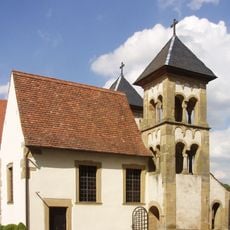
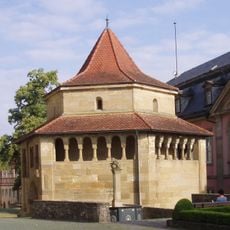
Schloss Tullau is a Renaissance castle in Schwäbisch Hall district featuring two residential towers linked by a wooden gallery. A chapel on the grounds displays Romanesque elements with a cross-vaulted choir and barrel-vaulted nave.
Tullau village is mentioned in 1090, but the castle itself was built in the second quarter of the 13th century, probably under Schenk Walther von Limpurg, as a rectangular residential tower with a ring wall. A second phase, likely under the Limpurg vassal Heinrich von Tullau (mentioned 1290), replaced the north ring wall with wing walls around a large courtyard and added a two-storey tower. In 1581 the two residential towers were merged into one Renaissance building.
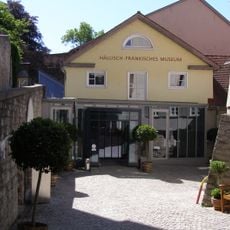
The clay figure known as the Tullauer Narr, probably once part of a fountain, dates from Leonhard Kern's time; it was still in the castle garden in the 19th century and is now kept in the Hällisch-Fränkisches Museum in Schwäbisch Hall. The estate was already counted by the city as a bourgeois property rather than a castle when Kern bought it in 1642.
The castle has been privately owned by the Huber family since 1851 and is not open for interior visits. The estate sits near the Schwäbisch-Fränkischer nature park, allowing you to view the exterior and surrounding gardens and meadows from public vantage points.
A clay figure called the Tullauer Narr once decorated the castle fountain and now resides in the Hällisch-Fränkisches Museum. It stands as a tangible connection between the site and the region's artistic traditions.
The community of curious travelers
AroundUs brings together thousands of curated places, local tips, and hidden gems, enriched daily by 92,618 contributors worldwide.