Monastery of Comburg, Benedictine monastery in Schwäbisch Hall, Germany
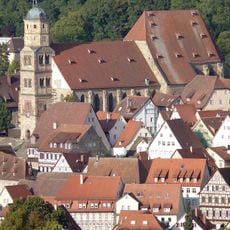
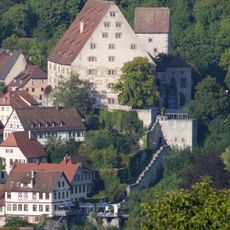
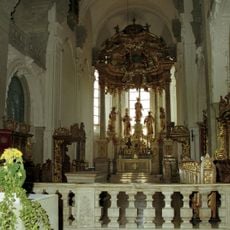
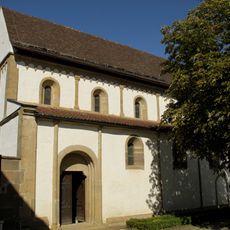
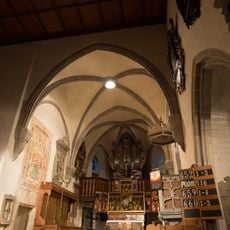
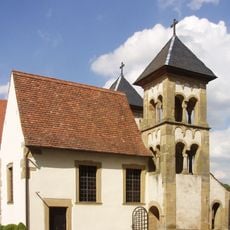
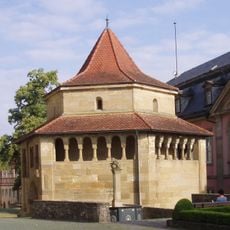
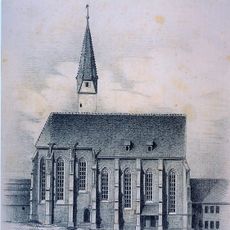
Comburg monastery is a Benedictine religious community in Schwäbisch Hall located on a hilltop above the town and surrounded by fortified walls. The complex contains the Church of St. Nicholas and various chapels that served as the spiritual core of monastic life.
In 1078, a nobleman named Count Burkhardt II transformed his ancestral castle into a Benedictine monastery, establishing a religious center for the region. This founding shaped the site's role for centuries to come.
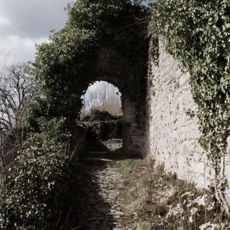
The name Comburg comes from the counts of Comburg-Rothenburg, whose castle stood here before the 1078 founding; the monastery is also called Großcomburg. From 1488 it was a noble collegiate foundation, and its canons had to prove noble descent. The ring wall of 1560–1570, built under Provost Erasmus Neustetter, still gives the complex its castle-like look.
The site sits on a hilltop and is reachable on foot from the town below, though the climb becomes steep. It is wise to wear comfortable shoes and allow enough time to explore the church and the various chapel areas.
The antependium is not in a treasury: it hangs in the Church of St. Nicholas, a wooden board 78 by 188 cm covered with gilded copper, made around 1130–1140, possibly in the Comburg itself. Embossed on it are the Twelve Apostles, six either side of Christ in a mandorla, framed by cloisonné bands and gemstones.
The community of curious travelers
AroundUs brings together thousands of curated places, local tips, and hidden gems, enriched daily by 92,825 contributors worldwide.