Limpurg, Medieval castle ruins in Schwäbisch Hall, Germany.
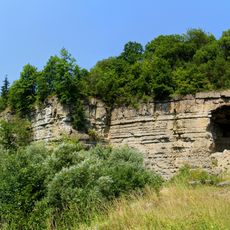
Limpurg is a castle ruin perched on a hilltop near Schwäbisch Hall, featuring stone walls and foundation remains that show how medieval fortifications were built. The fragments reveal the layout and scale of the original structure.
Walter Schenk von Schüpf, a hereditary cupbearer of the empire, built the castle before 1230 on his own land next to Schwäbisch Hall; he was first called 'pincerna de Limpurc' in 1230, and the castle was first directly named in 1263. In 1541 Erasmus von Limpurg sold it to the imperial city of Schwäbisch Hall for 45,700 guilders. The city demolished the complex by 1575, leaving the ruin.
The Schenken von Limpurg took their name from the castle around 1230, and the family kept it as its seat until Erasmus von Limpurg sold it to the imperial city of Schwäbisch Hall in 1541 for 45,700 guilders. He moved his residence to Obersontheim and Gaildorf, while the city used the fortress against robber knights.
The ruin sits about 1 km southeast of Schwäbisch Hall's old town, above the Unterlimpurg suburb, at 356.7 m on a west-projecting spur. A field-path bend south of the site still shows the old ditch of the earlier earthwork. The grounds are open terrain with uneven, unsecured masonry, so watch your footing.
The castle sits inside a presumed prehistoric, likely Celtic, hillfort. About 150 m east of the castle area, a section of rampart roughly 40 m long and up to 4 m high survives, with a ditch in front of it. Finds from the Oberlimpurg farmyard were first linked to the Michelsberg culture (4400–3500 BC).
The community of curious travelers
AroundUs brings together thousands of curated places, local tips, and hidden gems, enriched daily by 92,894 contributors worldwide.