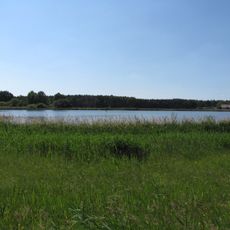
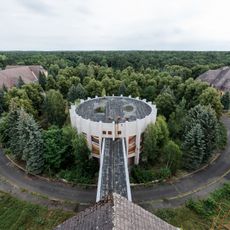
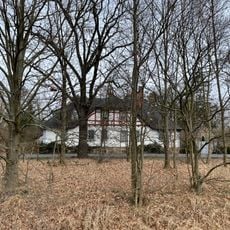
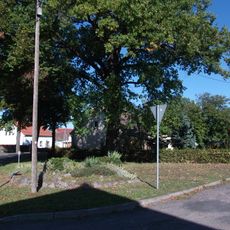
Sperenberger Gipsbrüche, Protected geological site in Am Mellensee, Germany.
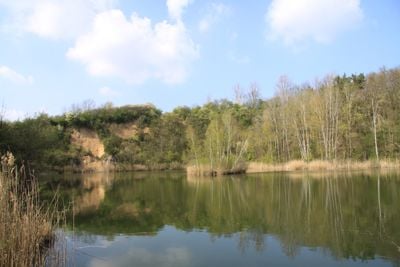
The Sperenberger Gipsbrüche is a 23.77-hectare nature reserve in Am Mellensee, Brandenburg, made up of four former gypsum quarry pits north of the Krummen See; only three of the pits lie within the reserve. The pits have steep rock faces and dry, vegetated floors, and the reserve also takes in part of the Sperenberger Gipsberg, a gypsum cap left on a Zechstein salt diapir.
Gypsum was quarried at Sperenberg from the 12th century until 1958. Between 1867 and 1871, borehole 2 of the former pits was drilled to 1,271.60 m, the first deep borehole in the world. Pumping to keep water out of the quarries carried rock salt into the nearby Krummer See, 140,000 tonnes in 1907 alone; rising salinity and collapses of leached cavities ended mining. The site was protected in 1998.
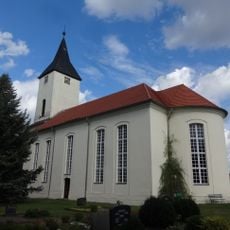
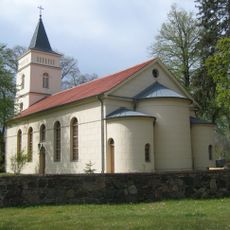
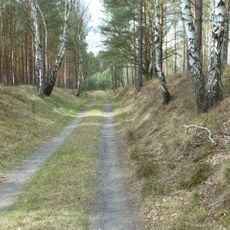
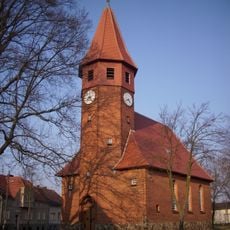
The name Sperenberger Gipsbrüche refers to the gypsum quarries of Sperenberg, worked from the 12th century until 1958. A panorama trail from the Evangelische Dorfkirche Sperenberg passes the four former pits, and part of it follows the 66-Seen-Regionalparkroute. A Boden-Geo-Pfad also crosses the reserve.
A panorama trail runs southeast from the Protestant village church of Sperenberg past the quarry pits, partly along the 66-Seen-Regionalparkroute, then back north over the Gipsberg to the church. A Boden-Geo-Pfad geopark path also crosses the reserve. Only three of the four pits lie inside the protected area.
Restloch 2, one of the four former quarry pits, was used as an operating landfill. Between 1867 and 1871 the world's first deep borehole was sunk here, reaching a depth of 1,271.60 metres. Only three of the four pits belong to the nature reserve.
The community of curious travelers
AroundUs brings together thousands of curated places, local tips, and hidden gems, enriched daily by 93,013 contributors worldwide.