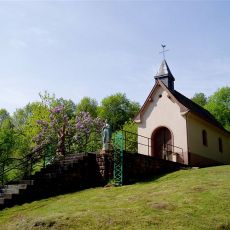
Hornbach monastery, Benedictine monastery in Pirmasens, Germany
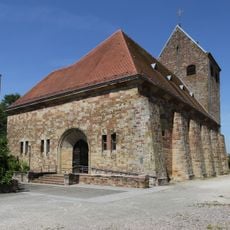
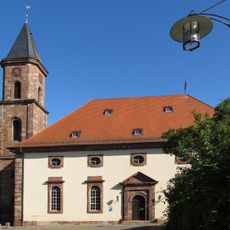
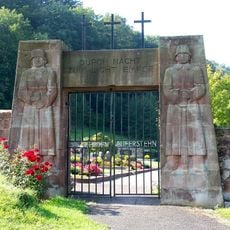
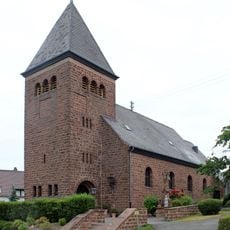
Hornbach monastery is a former Benedictine abbey in Hornbach, near Pirmasens. Of the 11th-century pillar basilica, which measured 72 metres in length and had two apses, five towers and a west building, only structural remains of the convent buildings survive. The long stone building with a red-brown tiled roof, rough reddish sandstone walls, five tall arched windows with red frames, three small dormer windows and a slender roof turret with a pointed spire and weather vane now houses a hotel and the Historama Kloster Hornbach museum.
Saint Pirmin founded the monastery in 741, establishing it as an important religious center. His burial at the site after his death in 753 increased its spiritual significance and drew pilgrims from the region.
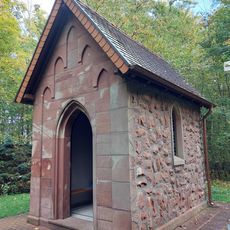
The monastery's name comes from the medieval town of Gamundias, now Hornbach. Since 1953, when the original tomb was rediscovered, pilgrims have come again to the empty grave, reached by steps leading down to a contoured sandstone frame; a window opening there let pilgrims touch the saint's shrine. The Protestant Church of the Palatinate built a chapel over the tomb in 1957.
Visitors can explore the grounds and view a museum with religious objects housed in the former monastery buildings. The site also offers a hotel and restaurant, allowing visitors to spend time discovering the space comfortably.
The empty tomb lies down a few steps, ending at a contoured sandstone frame at the foot of the burial niche; this window opening let pilgrims touch the saint's shrine. It is considered the oldest known evidence of church architecture in the Palatinate. The last abbot, Count Anton von Salm, had Pirmin's relics brought to Speyer in 1558.
The community of curious travelers
AroundUs brings together thousands of curated places, local tips, and hidden gems, enriched daily by 93,234 contributors worldwide.