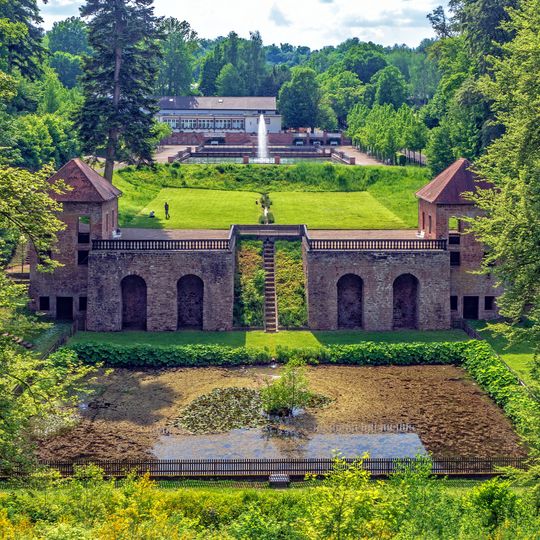
Lustschloss Tschifflik, Château in Rhineland-Palatinate, Germany
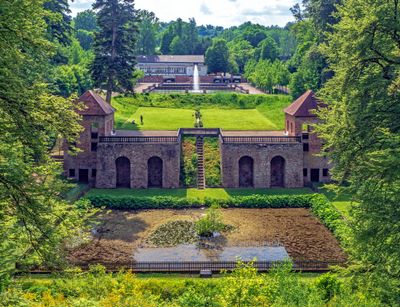
Lustschloss Tschifflik is a Baroque summer residence built in 1715–1716 for Stanisław I Leszczyński, with a main house, two residential houses, two utility buildings and a terraced layout with apartments. A 4-kilometer wall, 2.50 meters high, enclosed the complex, which also had a garden with an open-air stage and water features fed only by gravity.
Stanisław I. Leszczyński, the exiled King of Poland, had Tschifflik built in 1715–1716 as a summer residence during his stay in Pfalz-Zweibrücken. The Swedish master builder Jonas Erikson Sundahl realised the plans. Duke Gustav Samuel Leopold had Sundahl complete the unfinished residence in 1728. After the French Revolution the site was given to the Zweibrücken state stud farm and decayed until the city bought it in 1887.
The gardens were designed according to Baroque principles and show how the aristocracy of that time staged and used nature. Visitors can still follow the structure of this garden art today with its various areas and water features.
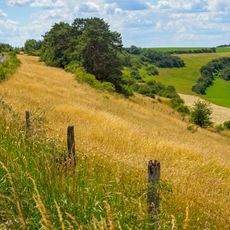
The grounds are extensive and require time to explore, especially if you want to see the terraced gardens in full. Sturdy footwear is recommended as there are paths at different elevations.
The northern part of the walled grounds holds the ruin of a motte-and-bailey castle from the early 12th century, with the foundations of a rectangular tower house, two cisterns, a ring wall, a shield wall of the outer bailey and a neck ditch. It was rediscovered and excavated only in the 1970s.
The community of curious travelers
AroundUs brings together thousands of curated places, local tips, and hidden gems, enriched daily by 94,111 contributors worldwide.