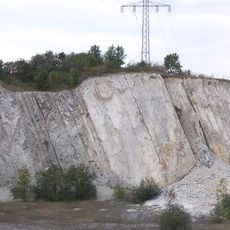
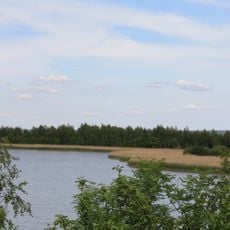
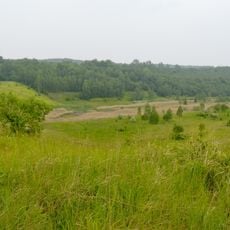
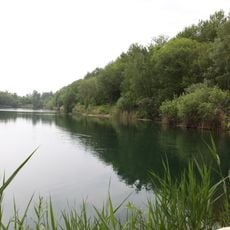
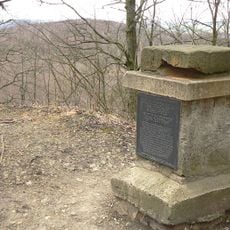
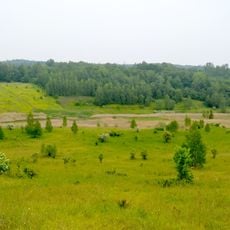
Sito archeologico di Salzgitter-Lebenstedt, Archaeological site in Salzgitter, Germany.
The Fundplatz Salzgitter-Lebenstedt is a Middle Paleolithic open-air site on the southern edge of the North European Plain, at about 82 m above sea level. Excavations in 1952 and 1977 uncovered around 840 flint artefacts and bones of at least 16 mammoths and 86 reindeer in sediments 4.5 to 5.5 m below the surface.
The site was found during construction of a sewage plant: in December 1951 a foreman brought bones to light, and a biology teacher recognised their age. Alfred Tode excavated about 150 m² in 1952, and a second campaign followed in 1977 over roughly 220 m². Radiocarbon work in the 1990s gave a minimum age of 50,000 years; the site is now dated to 58,000–54,000 years ago.
The site shows that the hunters specialised in reindeer, taking at least 86 animals, mostly adults aged eight to nine years. Because reindeer calve in May or June, the hunt fell between August and October. About 30 bone tools were made from mammoth ribs and fibulae, including a rare bone point.
The site was found during construction of a sewage treatment plant, and the excavated area is not a visitor attraction with regular opening hours. The finds themselves, including the Levallois flint pieces, are held in museum collections rather than displayed on site. Check locally before travelling to the spot.
The two skull fragments, catalogued as fossil Lebenstedt 1, were for a time the northernmost Neanderthal remains ever found. They came to light only because a construction foreman brought bones from the sewage plant dig to his daughter's school, where her biology teacher recognised them as ancient.
The community of curious travelers
AroundUs brings together thousands of curated places, local tips, and hidden gems, enriched daily by 92,671 contributors worldwide.