Lilienthalstraße Cemetery, Military cemetery in Neukölln, Berlin, Germany.
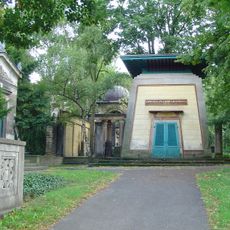
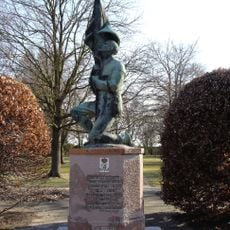
Lilienthalstraße Cemetery is a burial ground in Berlin-Neukölln containing separate sections for military personnel and civilian casualties from different periods. The grounds include various grave types and memorial areas arranged throughout the site.
The cemetery was built between 1938 and 1941 on part of the old Hasenheide shooting ranges, planned by the army construction office (Heeresbauamt) with designs by Wilhelm Büning. Military field bishop Franz Dohrmann consecrated it on 10 May 1940. From April 1941 burials became chargeable, and as Allied air raids killed more civilians, it ceased to be the central Berlin war cemetery originally intended. In October 1950 the Volksbund and the West Berlin Senate made it Berlin's central war grave site.
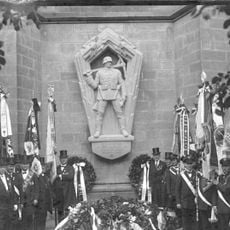
On the eve of Volkstrauertag the Volksbund Deutsche Kriegsgräberfürsorge holds a memorial ceremony here, framed by a Bundeswehr honour guard since the mid-1990s and attended by military attachés and foreign embassy representatives. Since 2011 the association Nike has used the cemetery for events and exhibitions on German-Polish relations, and since 2018 burials according to Islamic rite take place here.
The site is large and well-organized, so plan time to walk through the grounds comfortably. Information boards and markers help visitors locate different sections and understand the layout.
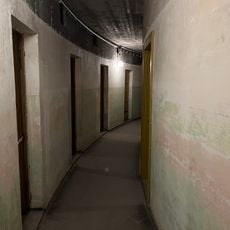
In 1966 a cube was built into the open staircase of the cemetery hall, serving as its crypt. It first held Ludwig Gies's "Eichenkranz" wreath from the Neue Wache; since that was moved to the Deutsches Historisches Museum in 2004, the space holds Fritz Cremer's sculpture "Sorgende Frau".
The community of curious travelers
AroundUs brings together thousands of curated places, local tips, and hidden gems, enriched daily by 94,272 contributors worldwide.