Columbiadamm Cemetery, Military and Muslim cemetery in Neukölln, Berlin, Germany
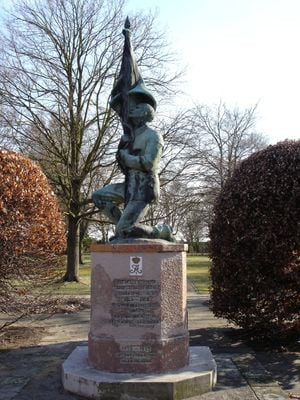
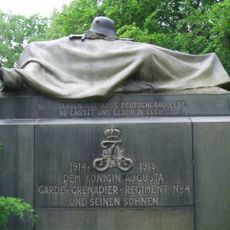
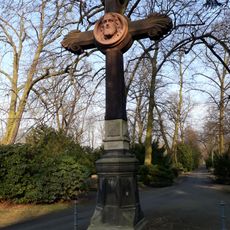
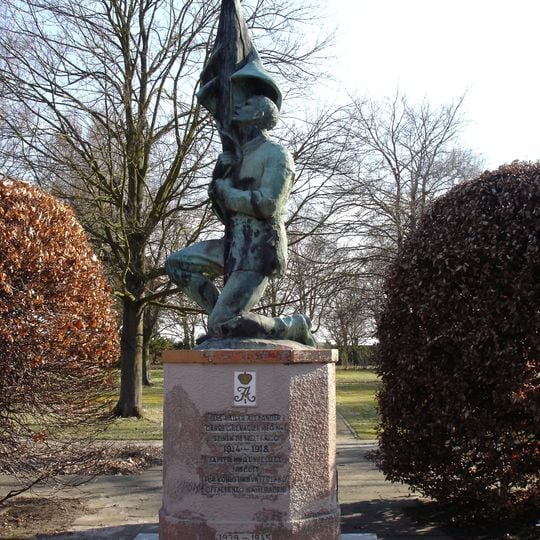
Columbiadamm Cemetery covers 104,044 m² at Columbiadamm 122–140 in Berlin-Neukölln and holds roughly 7,000 graves. Its most artistically noted monument, made by Johannes Boese in 1888, shows a life-size Prussian soldier lowering his flag in mourning; beside it stands a memorial to about 50 French soldiers who died of wounds in Berlin hospitals. A black syenite monument of 1925 by Franz Dorrenbach honours the Queen Augusta Guard Grenadier Regiment No. 4, a helmet resting on a flagcloth beneath which a man's contours and clenched fist appear.
The cemetery began in 1861 as a garrison burial ground and later received sections for World War I casualties and Germany's first Islamic burial area. The site expanded over time to include additional historical sections covering different conflicts and time periods.
The grounds display different types of gravestones and burial practices that reflect both German military tradition and Islamic customs. Visitors can observe how various religious and cultural traditions coexist within the same space.
The cemetery sits at Columbiadamm 122-140 and maintains protected heritage status while remaining open to visitors. The best time to visit is during daylight hours when there is enough light to explore the grounds comfortably.
The cemetery holds a communal grave for the 29 crew members of the naval airship L 2, which crashed at Berlin-Johannisthal airfield on 17 October 1913. The grave is easy to miss among the regimental monuments.
The community of curious travelers
AroundUs brings together thousands of curated places, local tips, and hidden gems, enriched daily by 93,849 contributors worldwide.