Colossus of Ostermunzel, Glacial erratic in Barsinghausen, Germany
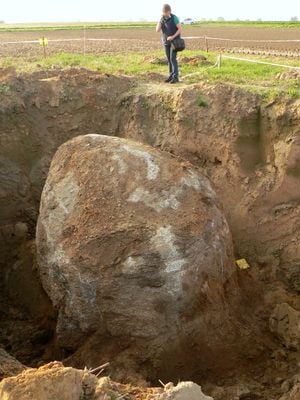
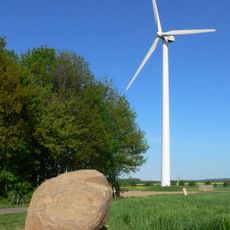
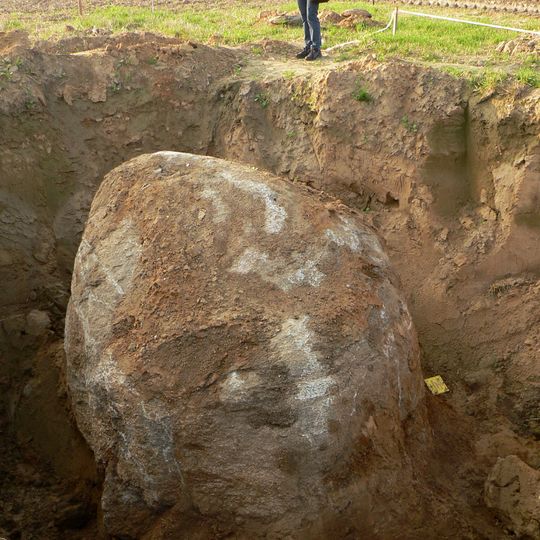
The Colossus of Ostermunzel is a massive gneiss boulder located on Mühlenberg hill near Barsinghausen. It measures approximately 3.2 meters in length and width, stands about 2.6 meters tall, and displays the characteristic gray color and grainy texture of solid stone.
This gneiss block originates from Scandinavia and was transported by ice movements during the glacial age. Its formation dates back roughly 1.4 to 1.6 billion years, making it a remnant from Earth's earliest history.
The stone's nickname, "Colossus", comes from its size: at 27.5 tonnes it ranks among the ten largest glacial erratics recorded in Lower Saxony. Its recovery in spring 2015 was staged as a public event, with several hundred onlookers watching the crane lift; the Hanover Region paid the 15,000 euros. A Terra xpress episode of the ZDF science magazine covered the find.
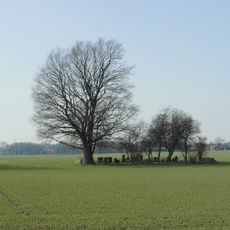
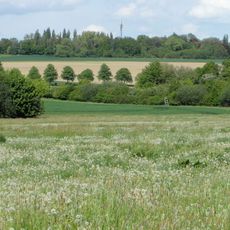
The stone sits near a bicycle path on Mühlenberg hill and is easy to reach on foot. The location works well for walkers and cyclists exploring the area.
The stone's weight was first estimated at 50 tonnes, but weighing during the 2015 recovery gave 27.5 tonnes. Geologists identified it as gneiss, a rock not normally found in Lower Saxony, and dated it at 1.4 to 1.6 billion years, with its origin probably in present-day Sweden.
The community of curious travelers
AroundUs brings together thousands of curated places, local tips, and hidden gems, enriched daily by 92,654 contributors worldwide.