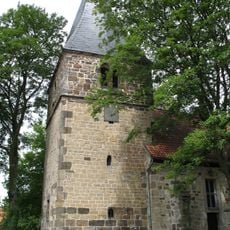
Rittergut Stemmen, Manor estate in Barsinghausen, Germany.
Rittergut Stemmen is a sandstone manor complex with residential buildings, farm structures, and park areas enclosed by a perimeter wall north of federal road B65. The property includes multiple sections arranged across the historic grounds, each with its own character and layout.
The estate originated in 1619 when Duke Friedrich Ulrich granted noble privileges to Arndt von Wobersnow and established it as a manor by consolidating two farms. This founding transformed the property from simple agricultural holdings into a privileged noble seat.
The potato and wine festival held on the estate grounds recalls Elias Friedrich Schmersahl, pastor in Stemmen from 1746 to 1755, who popularised the potato as food in the area. Guided tours of the estate are offered, and the listed ensemble is still farmed and partly lived in.
The estate lies north of federal road B65 at the foot of the Stemmer Berg, with access through a gate arch in the manor house leading to the rectangular farmyard. Guided tours of the grounds are offered, and festivals are held there, including a potato and wine festival. Parts of the complex are privately inhabited, so visitors should keep to the areas opened for tours and events.
In the 19th century, King Ernst-August of Hanover attempted to purchase the property for royal use but withdrew due to the excessive asking price. This episode reveals how highly the estate was valued at that time and its appeal to powerful figures.
The community of curious travelers
AroundUs brings together thousands of curated places, local tips, and hidden gems, enriched daily by 92,655 contributors worldwide.