Sandberg, Statistical district in northwestern Nuremberg, Germany
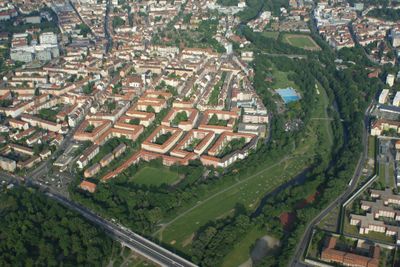
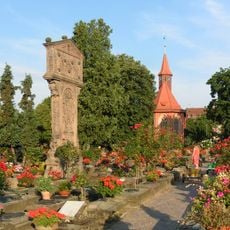
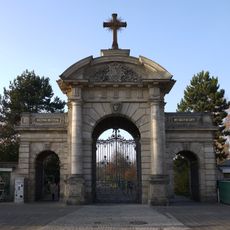
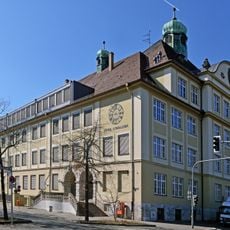
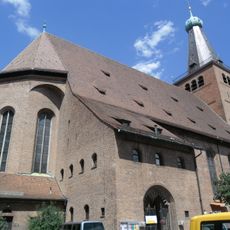
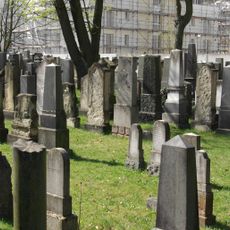
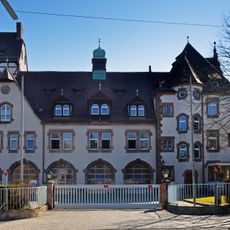
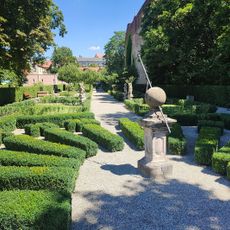
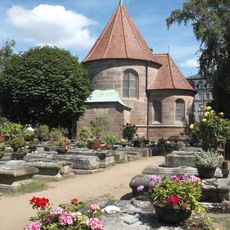
Sandberg is a statistical district in northwestern Nuremberg located between Klinikum Nord hospital, Johannisfriedhof cemetery, the Pegnitz River, and Westfriedhof cemetery. The area consists mainly of residential buildings from the early 20th century with broad streets, green spaces, and an orderly layout.
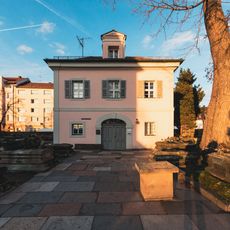
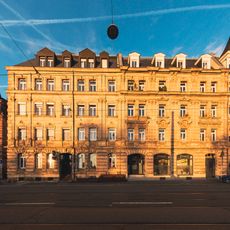
Until the 19th century Sandberg was open field in the municipality of Wetzendorf, crossed by Schnieglinger Straße, the old road to Schniegling and Fürth. Building of residential and commercial blocks began in the 1890s along Johannisstraße and the eastern edge; the listed houses Helmstraße 14 and Johannisstraße 132 and 134 date from this period. Wetzendorf, and with it Sandberg, was incorporated into Nuremberg in 1899. Until the 1920s maps called the area "Neu-Wetzendorf"; the name Sandberg recalls the quarrying of scouring sand there.
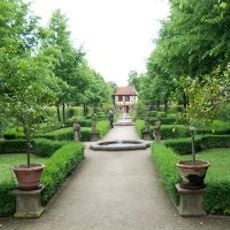
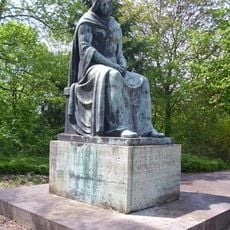
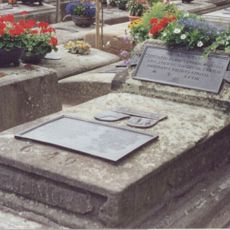
The name Sandberg comes from the Scheuersand (scouring sand) once dug here, recalled by the Sandbergstraße west of Johannisfriedhof. Near today's Westbad stood the Poetenwäldchen, meeting place of the Pegnesischer Blumenorden from its founding in 1644 until the order moved to the Irrhain near Kraftshof in 1678; a lectern-shaped monument in a small stone amphitheatre marks the spot. In the former BMF metalware factory, the Sandberg-Verlag publishes the works of the Verein Geschichte für alle, and at Wilhelm-Marx-Straße 8 the Fraunholz bakery produces and sells Lebkuchen.
The neighborhood is well served by tram lines with stops at Johannisfriedhof, Julienstraße, and Westfriedhof, making it easy to reach central Nuremberg. The area is walkable with most local attractions within comfortable reach on foot.
The Westbad is Nuremberg's busiest of the three municipal outdoor pools, not its largest. It has a 10-metre diving tower and a 50-metre swimming pool, and was rebuilt and modernised in 2010/2011. Near its site stood the Poetenwäldchen, meeting place of the Pegnesischer Blumenorden from its founding in 1644 until 1678; a lectern-shaped monument in a small stone amphitheatre marks it.
The community of curious travelers
AroundUs brings together thousands of curated places, local tips, and hidden gems, enriched daily by 94,407 contributors worldwide.