Lake Constance Nature Museum, Natural history museum in Constance, Germany.
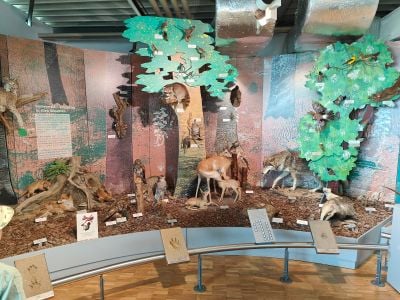
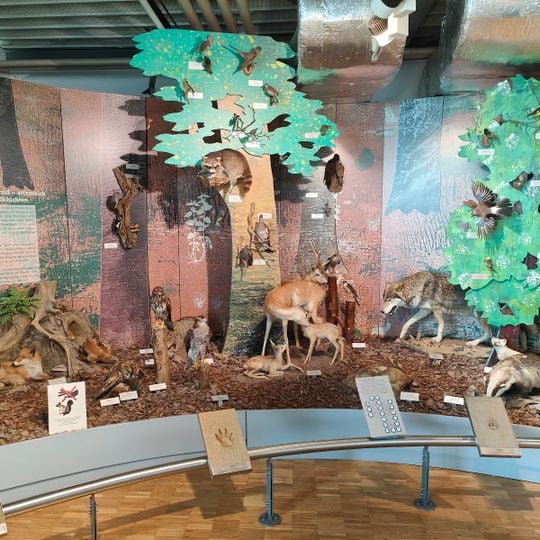
The Lake Constance Nature Museum in Constance displays taxidermy specimens, rock collections, and scenes showing the different habitats that exist around the lake. The exhibits give visitors a sense of which animals and plants belong to this region and what their living spaces actually look like.
In 1871 the Konstanz pharmacist and councillor Ludwig Leiner opened the Rosgartenmuseum in the former guild house "Zum Rosengarten", which also housed natural history specimens. The natural science collection grew from Leiner's own beetles, butterflies, minerals and fossils, plus the city's 1868 purchase of Karl Spackholz's 500 bird specimens. In 1999 the natural history museum moved into the top floor of the Sea-Life-Center in Klein-Venedig, funded by the city with 3.3 million DM.
The museum reflects how the people of the Lake Constance region have always lived closely with the lake and its natural surroundings, as shown through displays of local species and habitats. Visitors see how the waters and forests remain central to daily life in this part of Germany.
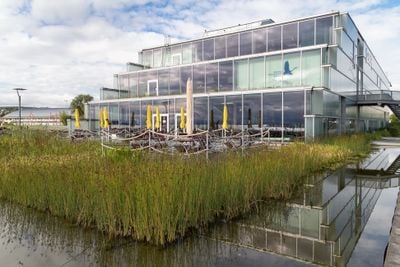
The museum occupies the top floor of the Sea-Life-Center in Klein-Venedig, near the Swiss border; the glass facade with the white lettering "Bodensee Naturmuseum" and the blue bird marks the building. A 2015 computer terminal gives more detail on individual exhibits. Family afternoons and events for children of all ages are held regularly.
The museum's depot holds over 30,000 objects, including about 18,000 prepared insects, some 5,000 fossils and roughly 2,200 minerals, mostly from the Lake Constance area. Among the plant sheets, the Leiner herbarium of around 16,000 specimens was restored and catalogued between 2002 and 2004, and the work turned up 23 type specimens of the genus Hieracium.
The community of curious travelers
AroundUs brings together thousands of curated places, local tips, and hidden gems, enriched daily by 93,841 contributors worldwide.