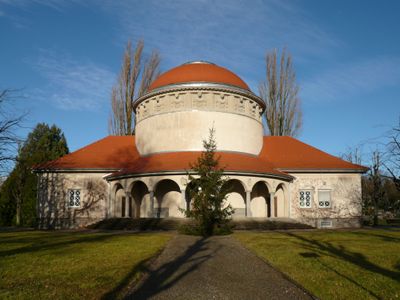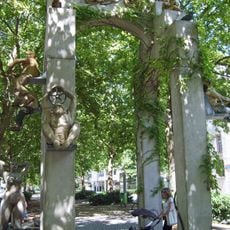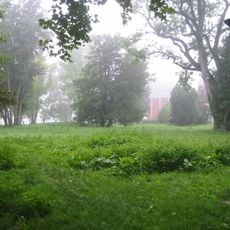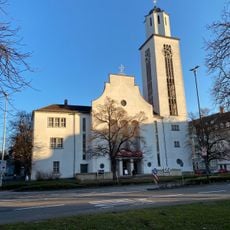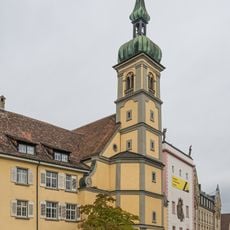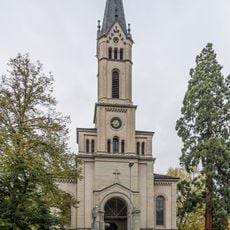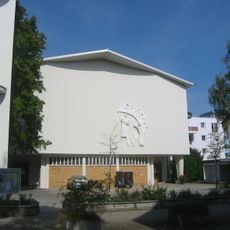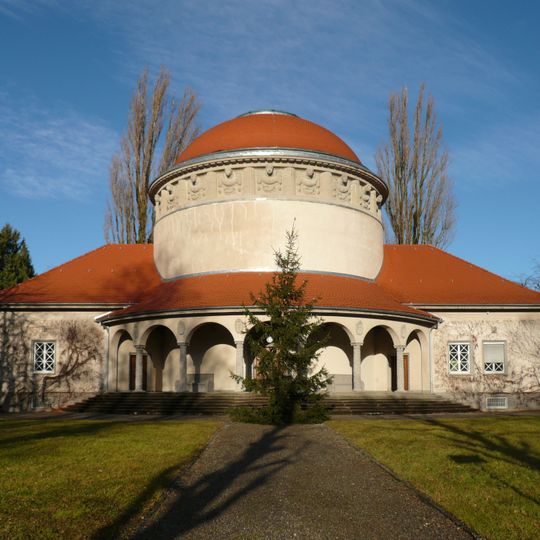
Hauptfriedhof Konstanz, Main cemetery in Petershausen district, Constance, Germany.
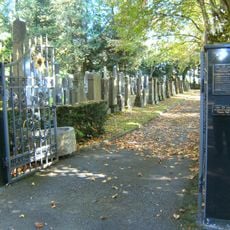
Hauptfriedhof Konstanz is a municipal cemetery on the right bank of the Rhine in the Petershausen district, near the boundary with Allmannsdorf. Opened in 1870 and enlarged in 1898, it serves Christian, Jewish and Muslim burials, with a Jewish cemetery section and a separate grave field for Muslims. Its grounds also hold soldier graves from both world wars, a war cemetery for First World War dead in the centre, crosses for the dead and missing of the Second World War at the upper end, and graves of forced labourers and euthanasia victims in grave field 14 A.
Hauptfriedhof Konstanz opened on 1 May 1870 on undeveloped land on the right bank of the Rhine in Petershausen, at the boundary with Allmannsdorf, replacing burials at the Schottenfriedhof on the left bank. It was enlarged in 1898.
The cemetery holds separate grave fields for Christians, Jews and Muslims, and the Jewish cemetery is a distinct area within the grounds. Johann Martin Schleyer, inventor of the constructed language Volapük, lies in grave field 12, row 11. The painter Marie Ellenrieder (1791–1863) is also buried here.
The cemetery lies on the right bank of the Rhine in Petershausen, at the boundary with Allmannsdorf. The war grave section for First World War dead sits in the middle of the grounds, while crosses for the dead and missing of the Second World War stand at the upper end. Grave field 14 A holds the graves of euthanasia victims and the Zoffingen monastery burial place.
Grave field 14 A holds the Ruhestätte Kloster Zoffingen, the burial place of the Zoffingen convent, alongside the graves of euthanasia victims. The cemetery also keeps a separate war grave section for First World War dead in its centre and crosses for the missing of the Second World War at its upper end.
The community of curious travelers
AroundUs brings together thousands of curated places, local tips, and hidden gems, enriched daily by 94,141 contributors worldwide.