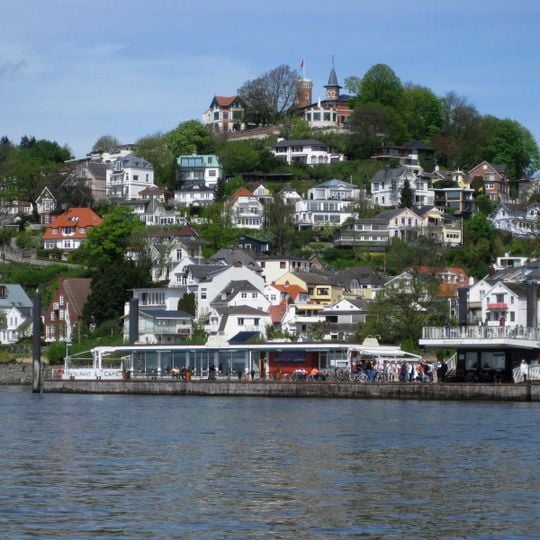
Süllberg, Summit and mountain in Blankenese, Germany
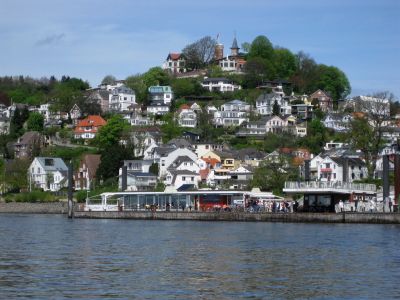
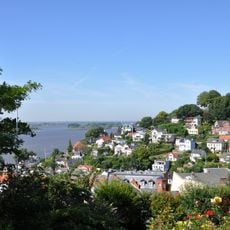
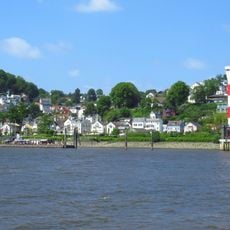
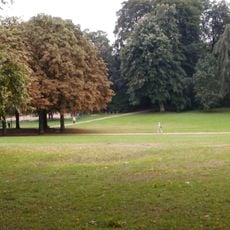
The Süllberg is a hill in Blankenese, Hamburg, that rises about 75 meters above sea level and offers several paths with views over the Elbe River. The walking trails pass through residential areas and provide different vantage points of the river and surrounding landscape.
In the 11th century Archbishop Adalbert I of Hamburg and Bremen had the wooded Süllberg cleared and a castle built from its timber to protect the Elbe ferry crossing; a provostry was also established. The castle was destroyed soon after. In 1258 the Schauenburg counts John I and Gerhard I built a second castle for the same purpose, which was demolished in 1262.
The name Süllberg derives from the original "Sollenberge". The Treppenviertel, a staircase quarter of nearly 5,000 steps, links the summit plateau to the Elbe beach. Its listed houses include 18th-century brick half-timbered "Tweehuus" and "Dreehuus" for two or three families, and Biedermeier-style homes from the early 19th century.
The summit plateau is about 250 m north of the Elbe shore and is linked to the beach by the Treppenviertel, a stair quarter of just under 5,000 steps. The 20 m stone lookout tower and guest terraces, built from 1887, stand on the plateau. The Süllberg is the third-highest hill in Blankenese, after the Waseberg at 87 m.
The 20-metre stone lookout tower on the summit dates from 1887, when the guest terraces were also laid out; a wooden tower had stood there since 1850. The HADAG later ran a landing pier at the Elbe shore below, the "Blankenese Süllbergbrücke".
The community of curious travelers
AroundUs brings together thousands of curated places, local tips, and hidden gems, enriched daily by 92,641 contributors worldwide.