Steinbeck Manor, Archaeological monument in Mecklenburg-Vorpommern, Germany
Steinbeck Manor is a large brick building in northern Mecklenburg with a gabled roof and small windows, dating from the early 1800s. The house was built on the grounds of an older water fortress and is surrounded by ancient tree plantings and historic paths that mark the former park layout.
The estate has roots back to the Middle Ages when it belonged to the Bellin family, whose ancestors lived in the area by 926. In the early 1800s it gained its main house under the Hardenberg family, later expanded by Henry Brarens Sloman in 1910, before being converted to a collective farm during East German times.
The name Steinbeck points to the noble families who shaped the estate over centuries. This place was a center of rural life where landowners exercised power through vast holdings and employed the local community.
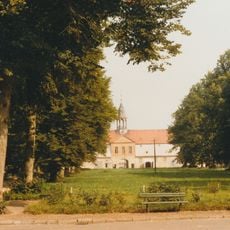
The manor house itself was demolished around 1968, so what remains is the former estate layout: remnants of the path network with avenue trees and the old horse and pig stables flanking the forecourt, some now converted to housing. The terrain is unpaved and can be muddy after rain, so sturdy shoes help. The site lies near Bellin in Mecklenburg, with Güstrow as the historic postal station for the area.
The manor house survived until around 1968, when it was demolished; only the former horse and pig stables flanking the forecourt remain, now partly converted into flats. The old avenue trees and path network still trace the park layout of the roughly 400-hectare estate that Henry Brarens Sloman bought in October 1910 for 500,000 Reichsmark.
The community of curious travelers
AroundUs brings together thousands of curated places, local tips, and hidden gems, enriched daily by 93,641 contributors worldwide.