Dominsel, Cultural heritage ensemble in Mitte, Germany.
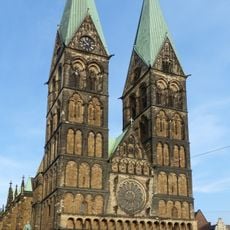
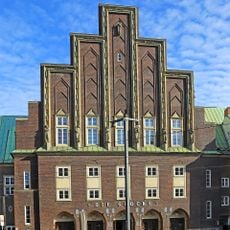
Dominsel is a protected architectural ensemble in central Bremen that comprises the cathedral and multiple historic buildings spread across the area between several streets. The site displays different building styles from medieval to modern times and includes museums, archives, and public spaces.
Bremen's history began in the 780s with the first church of missionary bishop Willehad on the cathedral dune. Archbishop Libentius I (988–1013) enclosed the clergy settlement, the Domburg, with a rampart; his successor Unwan (1013–1029) gave the worldly settlement its own parish church outside it. From 1042 Archbishop Bezelin laid the foundations of the large cathedral that still shapes the street layout. The cathedral immunity survived as a legal enclave until 1803.
The name refers to the cathedral precinct, not to water: the Domfreiheit was a legal enclave of the archbishops until 1803, when it passed to the city of Bremen. The cathedral became Lutheran in 1638, while the city council had turned Reformed in 1581, so two confessions long shaped the area. The Glocke concert hall of 1928 now stands on Domsheide.
The grounds are easy to explore on foot since the various buildings are close together and connected by public paths. Visitors should set aside time for each location, especially if they want to visit the museums and archive.
Unlike other cathedral islands, this is not a water-surrounded area but rather a protected architectural zone in the middle of the city. The term refers to the cathedral precinct and reflects how Bremer residents understood the concept of special sacred space.
The community of curious travelers
AroundUs brings together thousands of curated places, local tips, and hidden gems, enriched daily by 93,761 contributors worldwide.