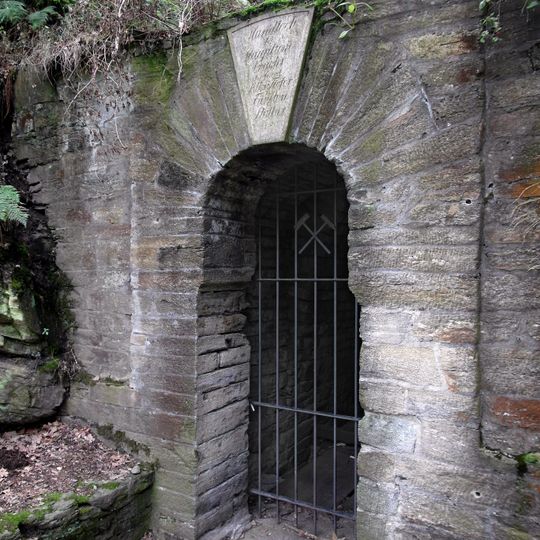
Alter Tiefer Fürstenstolln, Mining tunnel heritage site in Halsbrücke, Germany.
The Alter Tiefer Fürstenstolln is a tunnel system beneath the Freiberg region with a main passage about 10 kilometers long and side branches extending across a much larger underground network. The system connects several localities and continues to function partly today as a drainage network.
The tunnel was first documented in 1384 and evolved over five centuries into the backbone of water management for the Freiberg Mining District. Its role as a drainage system was essential to keep mines operating and to maintain regional stability.
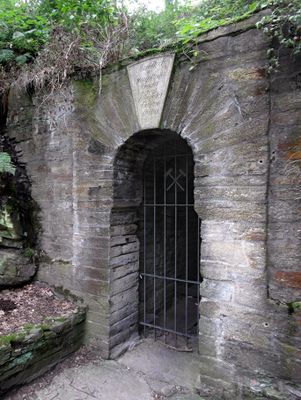
The entrance displays carefully crafted stone elements including a Gneiss arch and sandstone blocks carved with the Saxon coat of arms. These architectural details reflect the skilled craftsmanship of miners who dug and shaped this passage by hand.
The tunnel system still operates today, channeling water into streams and rivers that contribute to local power generation. Visitors should know that this is an active water system and not all areas are freely accessible.
The main entrance features a special reference stone called the zero point marker that indicates the reference height for the entire historic surveying system of Freiberg mining. This single stone stands as a quiet record of the precise surveying methods miners had developed centuries ago.
The community of curious travelers
AroundUs brings together thousands of curated places, local tips, and hidden gems, enriched daily by 91,569 contributors worldwide.