Barrage de la Kerspe, Reservoir in North Rhine-Westphalia
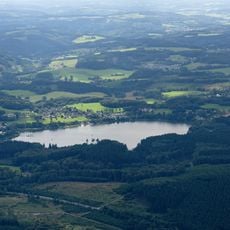
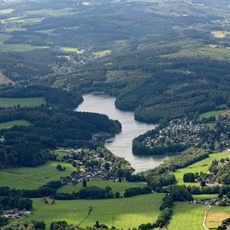
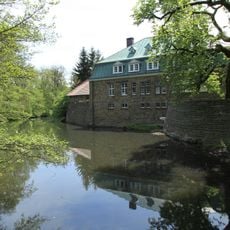
The Kerspetalsperre is a drinking-water reservoir held back by a gravity dam of dressed quarry stone built across the Kerspe valley between Halver, Kierspe and Wipperfürth. The dam, designed by Otto Intze of Aachen, was built from 1908 to 1912 and put into service in 1913. In the 1990s it was strengthened with a sealing wall on the upstream face and a control gallery.
The Kerspe dam was built between 1908 and 1912 to a design by Otto Intze of Aachen; the plant went into service in 1913. In the 1990s the masonry wall was strengthened with an upstream sealing membrane and a control gallery, and a small hydropower unit of 2 × 68 kW was installed. On 1 January 2016 the Wupperverband bought the dam from the Wuppertaler Stadtwerke for 46 million euros, together with the Herbringhauser Talsperre.
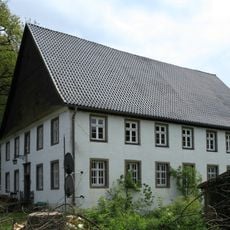
The reservoir takes its name from the flooded Kerspe valley; the hamlets of Ober- and Niederhersbach, Kerspe, Strombach and several powder mills disappeared under the water. The farmhouse Rhinschenschmidthausen, built in 1724, was moved before the flooding to the LVR open-air museum in Kommern, where it stands in the Bergisches Land group.
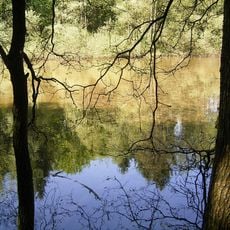
The banks lie in water protection zone I, so public access to the shore and the dam is not possible; the reservoir can only be seen from outside the protected area. The dam is supervised by the Cologne environmental authority. The intake is 20 million m³ a year, up to 70,000 m³ a day.
The hamlet of Rhinschenschmidthausen, a single-farm settlement of the Bergisches Land hall-house type, lay in the catchment and would have been submerged; the 1724 building was moved to the LVR open-air museum in Kommern, where it stands in the Bergisches Land group.
The community of curious travelers
AroundUs brings together thousands of curated places, local tips, and hidden gems, enriched daily by 94,327 contributors worldwide.