Roskapellchen, Chapel in Aachen, Germany
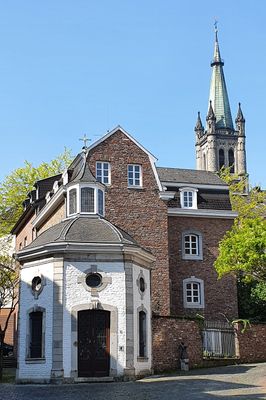
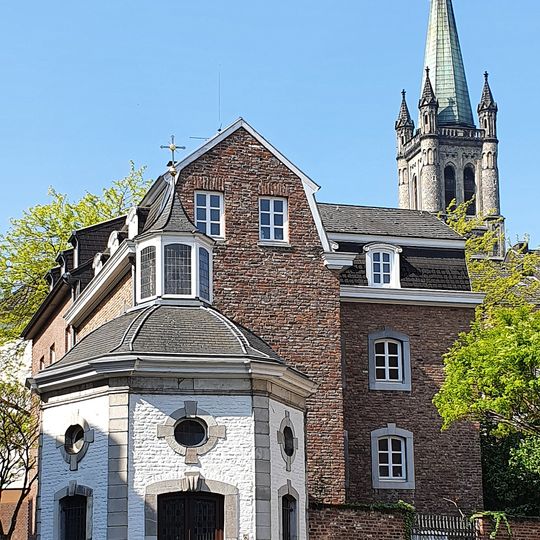
The Roskapellchen is a small chapel with a distinctive hexagonal shape built from light brick reinforced with limestone at its corners. Its entrance doors display intricate ironwork that gives the compact structure its characteristic appearance.
Built between 1758 and 1759, the chapel replaced an earlier stone column that held a statue of Mary dating from the early 1500s. It took over the religious purpose of the older devotional site that stood in its place.
The name comes from the Rosviertel district; whether "Ros/Rues" derives from the Roman road name "via rotta" or from a nearby flax-retting pit is unresolved. Since a cholera epidemic in 1832, when more than 400 residents fell ill, the roughly 200 survivors have walked an annual petition procession to the chapel. Until World War I, neighbourhood children offered candles at the Marian image for a sick child and read healing or its opposite in how steadily they burned.
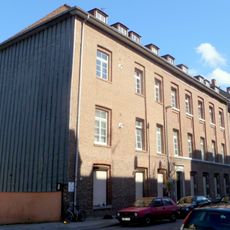
The chapel stands near the St. Jakob parish church, close to the route of the Jakobsweg, and two of its rear sides lean against an old residential building, so only four of the six sides are visible from outside. The entrance is a double-winged round-arched wooden door; the interior altar sits behind a thick glass pane and an wrought-iron candle stand.
The chapel was hit again in the Battle of Aachen in 1944, and the Mary figure survived the war damage a second time, as it had survived the 1656 city fire. Restoration was only completed in 1958, when a memorial plaque recorded the 1758–1759 construction under pastor Johann Jakob Kloubert and the 1958 restoration under Kaspar Sinzig.
The community of curious travelers
AroundUs brings together thousands of curated places, local tips, and hidden gems, enriched daily by 92,705 contributors worldwide.