Dreifaltigkeitskirche, Catholic parish church in Sandhausen, Germany
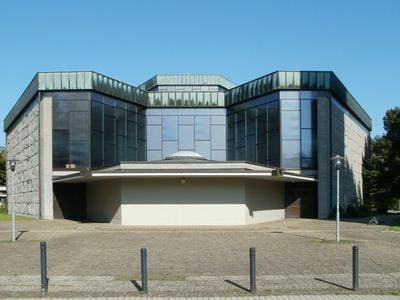
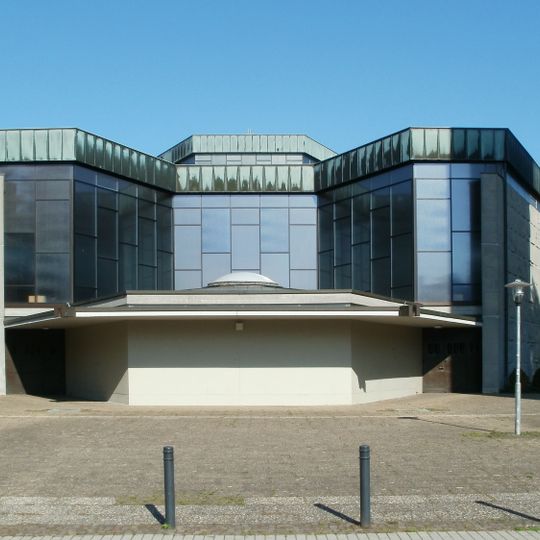
The Dreifaltigkeitskirche is a church building in Sandhausen with a hexagonal floor plan and modern concrete roof, marked by handmade brick interior walls. The spaces feel generous and open due to their height and construction.
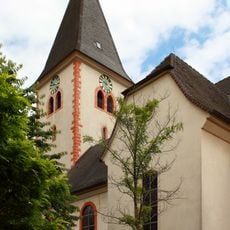
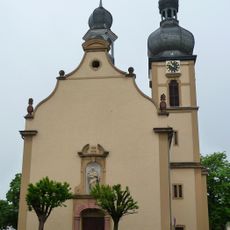
A church in Sandhausen is documented since 1359, on the site of the later synagogue; it became Protestant with the Reformation in the Palatinate and the Catholic parish ceased in 1560. Catholic services resumed in the town hall from 1742, and the St. Bartholomäus church, built in 1766/67, became a parish seat in 1862. After the Second World War the Catholic community exceeded 4,000, so in 1963 a new church was decided; the foundation stone was laid in 1967 and Weihbischof Karl Gnädinger consecrated it on 27 October 1968.
The interior features geometric shapes that form a triangle above the altar and shape how the space feels. These modern design elements create a particular impression when you enter the church.
The church stands on Sandhausen's eastern edge, with the free-standing campanile southwest of the main building. The two portals, carved with niche figures by Peter Dreher, mark the entrances; the left shows Jesus teaching, the right the wedding at Cana and the multiplication of loaves. The interior is reached past the low weekday chapel on the west side.
The Stations of the Cross by Gisela Bär are not the usual fourteen stations but a Passion cycle running from the Last Supper to the Resurrection. Look also at the baptismal font she made, whose bronze lid carries a water motif and two stylised deer as handles.
The community of curious travelers
AroundUs brings together thousands of curated places, local tips, and hidden gems, enriched daily by 93,066 contributors worldwide.