Leopoldsprudel, Thermal spring and architectural monument in Bad Salzuflen, Germany.
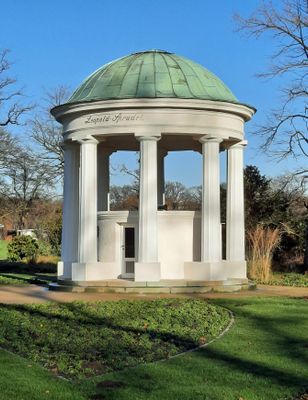
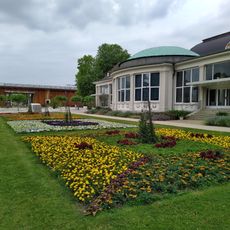
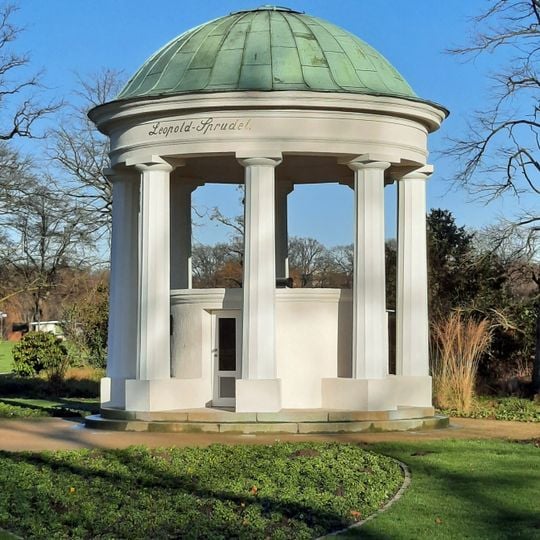
Leopoldsprudel is a thermal spring with a classical monopteros pavilion located in the Kurpark of Bad Salzuflen and is protected as an architectural monument. The spring emerges from deep underground and feeds the pavilion with its mineral-rich water.
The drilling point was chosen by Prussian state geologist August Leppla, and the bore was sunk from late October 1905 to 2 March 1906. The artesian water rose at 70 cubic metres per hour, with a salt content nearly double that of the Paulinen and Sophien springs. Prince Leopold visited the site on 8 September 1906, and the spring was christened on 24 July 1907, taking its name from Leopold IV, the last reigning prince of Lippe.
The monopteros structure surrounding the spring showcases classical architectural elements with its circular design and supporting columns in the Kurpark. The design shapes how visitors experience this protected heritage site and creates a gathering place within the park.
The spring is located in the Kurpark and is freely accessible to visitors who want to explore the grounds. The park provides plenty of space for walking, sitting, and viewing the classical architecture up close.
The borehole reaches 534 metres, and the water rises artesian at 21.7 °C with 7.1 percent mineral content and 1298 milligrams of carbon dioxide per kilogram. When the drilling water was released into the Salze on its way to the Bega and Werre in 1905/06, it caused a fish kill.
The community of curious travelers
AroundUs brings together thousands of curated places, local tips, and hidden gems, enriched daily by 92,743 contributors worldwide.