Forsthaus Derenborn, Forester's lodge in Höxter, Germany
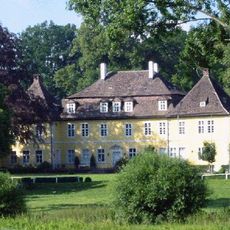
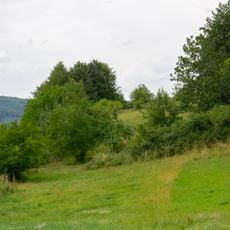
Forsthaus Derenborn was a forester's lodge in Höxter consisting of a main residence, outbuildings for horses, and grounds surrounded by forest. The complex served as the administrative center for managing and overseeing the surrounding woodlands.
The farmstead's residential building burned down on the night of 28 April 1814; a former sheep barn was converted into a dwelling instead of building anew. In 1815 the lease was ended, the farmland reforested, and the converted building used as a forester's lodge, first mentioned in 1821. It was called Königliche Försterei until 1918 and was demolished in December 1963.
Locals call the site "Spitzenförsterei" or "Spitze". From 1815 the converted building served as a forester's lodge, and until 1918 it bore the title "Königliche Försterei". In 1897 Paul Martin Götz became royal hegemeister there; his son Peter, born on Derenborn in 1897, was the fifth-generation forester and lived on the farm from 1930 until his retirement in 1962.
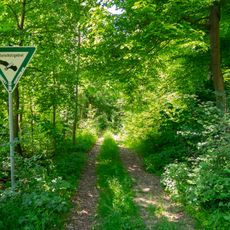
The former site is accessible via hiking trails, and a new shelter called 'Zum Spitzenförster' was built around 100 meters from the original location. This structure now serves as a waypoint and rest spot for visitors exploring the forest trails.
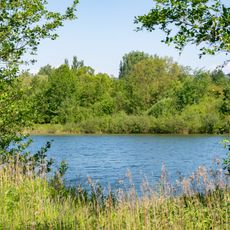
The pond behind the lodge was used from 1837 for a leech-breeding trial ordered by the Berlin government. It never paid off, and the attempt was abandoned in 1851 because of the high costs.
The community of curious travelers
AroundUs brings together thousands of curated places, local tips, and hidden gems, enriched daily by 93,768 contributors worldwide.