Kurpark Bad Oeynhausen, Spa park in Bad Oeynhausen, Germany.
Kurpark Bad Oeynhausen is a large landscaped park with walking paths, planted gardens, and historic structures built between the 1850s and 1915. The grounds combine open lawns with tree groupings and feature former bathhouses and a theater throughout the site.
The spa was licensed in 1845 for Karl von Oeynhausen and named Königliches Bad Oeynhausen by King Friedrich Wilhelm IV in 1848. Peter Joseph Lenné drew the main plan in 1847, and from 1851 to 1853 a horseshoe-shaped park ringed by a tree-lined Korso was laid out. From 1945 the British army headquarters fenced it with barbed wire, using the Kaiserpalais as a canteen; from 1954 to 1969 Hermann Mattern's plans dissolved the neo-baroque parterre and its axes.
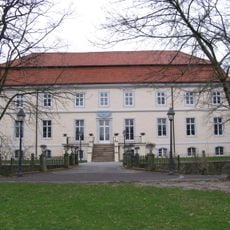
The park's name comes from Karl von Oeynhausen, whose brine spring was licensed in 1845 and named Königliches Bad Oeynhausen by King Friedrich Wilhelm IV in 1848. A bust of the king stands in the park as its founder, and a bust of Oeynhausen faces Badehaus I. The Kaiserpalais, modelled outside on a baroque palace and inside on the Paris Opera, now houses the GOP Varieté theatre.
The park is freely accessible year-round and easily reached by most visitors. Several restaurants, cafes, and lodgings are located near the entrances, and the walking paths are straightforward to navigate.
The Jordansprudel, drilled in 1926 just south of the park, threw a fountain jet up to 50 metres high and became the park's landmark; in the 1960s part of the Oeyne stream was removed to bring it into the grounds. A bust of King Friedrich Wilhelm IV honours the park's patron.
The community of curious travelers
AroundUs brings together thousands of curated places, local tips, and hidden gems, enriched daily by 93,649 contributors worldwide.