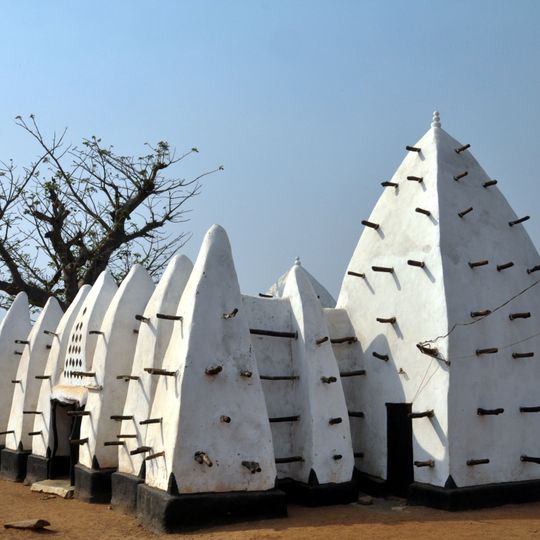
Larabanga Mosque, Mosque in Savannah Region, Ghana
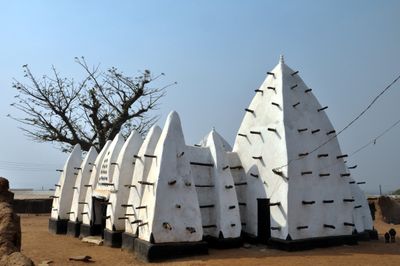
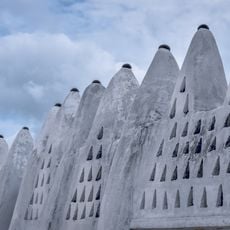
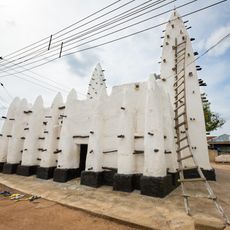
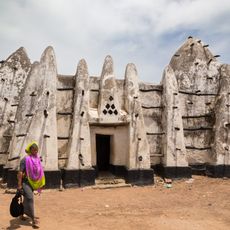
Larabanga Mosque is a whitewashed adobe building of about 8 by 8 metres, with two pyramidal towers: the east facade holds the mihrab facing Mecca, and a minaret stands at the northeast corner. Twelve conical buttresses brace the walls, and rows of dark wooden pegs project from the plastered surfaces. A low wall links the towers above a blackened base.
Local tradition credits the trader Ayuba with founding the mosque in 1421 after a dream near a mystic stone; researchers instead date its origins to the mid-17th century. A 1970s cement-sand render trapped moisture in the adobe walls and termites infested the timber, causing part of the building to collapse. A September 2002 storm destroyed the mihrab and minaret, prompting a World Monuments Fund-backed restoration with a US$50,000 American Express grant, completed with CRAterre and local artisans.
The building has separate entrances for the village chief, men, women, and the muezzin who calls the faithful to prayer. The mud walls are still maintained by local craftsmen who practice traditional plastering using the same materials as centuries ago.
The building requires regular maintenance using traditional mud-based plaster techniques to prevent damage from rain and wind. Visitors should inquire before entering, as it remains an active place of worship with restricted access during prayer times.
Inside rests an ancient Quranic manuscript that, according to local tradition, appeared in 1650 as an answer to the prayers of Imam Yidan Barimah Bramah. The manuscript is kept in a small chamber and is regarded by residents as a holy relic.
The community of curious travelers
AroundUs brings together thousands of curated places, local tips, and hidden gems, enriched daily by 92,919 contributors worldwide.