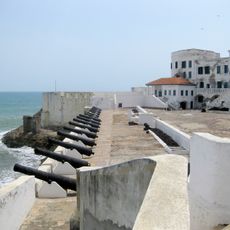
Fort Victoria, British colonial fort in Cape Coast, Ghana
Fort Victoria stands in the western part of Cape Coast Township, built in 1821 on the site of an earlier fort named after Governor James Phipps. It was first called Phipps Tower after Governor Phipps and later renamed for Queen Victoria. Its close proximity to Fort William means the two can be viewed from one another.
Fort Victoria was built in 1821 on the site of an earlier fort named after its builder, Governor James Phipps. It was first called Phipps Tower after English Governor Phipps, and was later renamed in honour of Queen Victoria. It served as an outlook post for signalling and to fend off attacks, and in 1979 it was inscribed on the UNESCO World Heritage List with nearby forts and castles.
The fort's name changed from Phipps Tower to Fort Victoria in honour of Queen Victoria. It is one of the Cape Coast forts and castles inscribed on the UNESCO World Heritage List in 1979 for their European colonial significance. It is now a national monument and one of Ghana's tourist sites.
The site is accessible on foot and sits on elevated terrain with stairs and uneven pathways throughout. Comfortable walking shoes are recommended, and visitors should be prepared for the hot, humid tropical climate, particularly during the rainy season.
Fort Victoria stands close enough to Fort William that the two can be seen from each other, a pairing that shaped how the ridge was watched. It was first called Phipps Tower after Governor James Phipps, who built the earlier fort on this site, and only later took Queen Victoria's name. In 1979 it was listed with the nearby forts and castles as a UNESCO World Heritage Site.
The community of curious travelers
AroundUs brings together thousands of curated places, local tips, and hidden gems, enriched daily by 93,342 contributors worldwide.