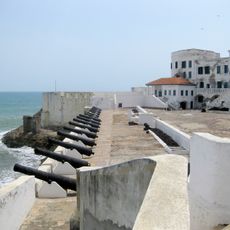
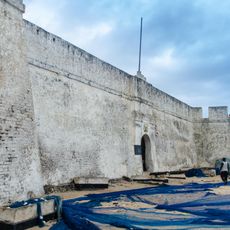
Fort Nassau, Dutch colonial fort in Moree, Ghana
Fort Nassau stands in ruins near Moree, Central Region. The Dutch shipped its bricks entirely from the Netherlands and built it in local fashion, though unfamiliar with tropical construction; the result was a poorly ventilated, unhealthy structure. It was the first Dutch fort on the Gold Coast.
Dutch traders built a fortified post at Mouri in 1612 under Jacob Clantius, after the 1610 burning of their factory and the Treaty of Asebu. The Dutch West India Company took over and enlarged it in 1624. It served as the Dutch Gold Coast headquarters until 1637, when Elmina was captured. Britain seized it in 1782 and finally in 1868.
The fort's name comes from the House of Nassau, the dynasty of the Dutch stadtholders. The site is near Moree in the Central Region, and the fort was inscribed on the UNESCO World Heritage list in 1979 together with several other castles and forts in Ghana. In 1645 its garrison counted 32 men, a doctor, a coppersmith and 156 enslaved people.
Fort Nassau stands in ruins near Moree in the Central Region, and the surviving walls are reached on foot from the village. The site is not a staffed museum, so there are no fixed opening hours; ask locally before setting out. The fort was abandoned for several years in the early 19th century and changed hands repeatedly, so expect weathered masonry rather than intact rooms.
The bricks for Fort Nassau were shipped whole from the Netherlands so the Portuguese would have no pretext to interfere with the building work. The Dutch, unfamiliar with tropical construction, put the fort up in local style, and it gained a name for being unhealthy and badly ventilated. In 1645 the garrison counted 32 men under a commander, plus a doctor, a coppersmith and 156 enslaved people.
The community of curious travelers
AroundUs brings together thousands of curated places, local tips, and hidden gems, enriched daily by 94,169 contributors worldwide.