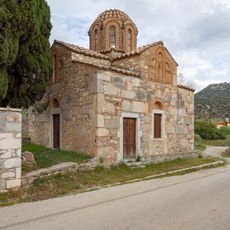
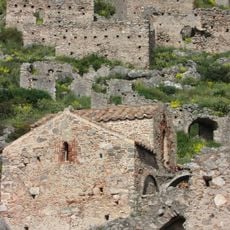
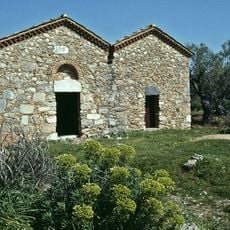
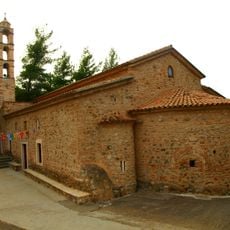
Panagia Elonis monastery, Greek Orthodox monastery in South Kynouria, Greece
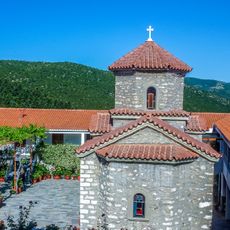
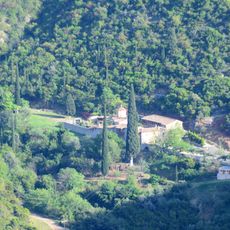
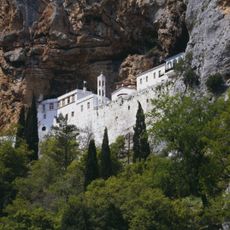
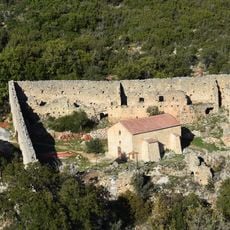
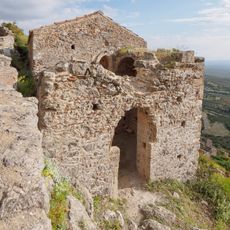
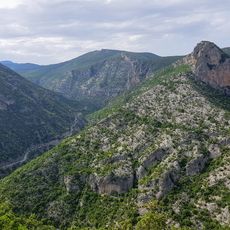
Panagia Elonis is a Greek Orthodox monastery in the mountainous region of South Kynouria, built into a passage carved into red rock. Its buildings are arranged across several levels on the hillside and connected by narrow corridors.
The monastery's history begins around 1300, when shepherds saw a light on an inaccessible slope of Mount Parnon; two hermits, Kallinikos and Dositheos, settled there and built a small church with two cells. In 1770, after the Orlov Revolt, Ottoman reprisals burned and plundered the monastery and killed its monks; it was rebuilt in the following decade. In 1833 it was briefly dissolved under King Otto's secularization decree, then judged worth preserving. It was a men's monastery until 1971 and became a women's monastery in 1972.
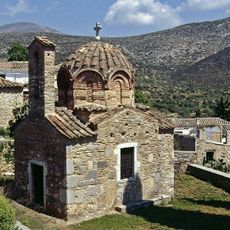
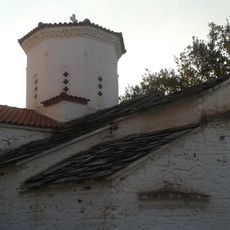
The monastery is dedicated to the Dormition of the Theotokos and celebrates its feast on 15 August. The original Panagia icon is shown in the church only during that week; a copy stands there the rest of the year. The icon was stolen on 18 August 2006 and recovered 38 days later at Faraklo in Laconia.
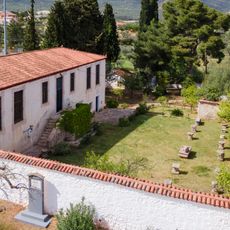
The monastery is reached by climbing stairs that lead to two entrances and connect the different levels of the complex. Comfortable shoes are a good idea since the ground is uneven and some corridors are narrow.
The monastery became a women's community in 1972, not 1971, after operating as a men's monastery until then. The 2001 census counted four nuns living there. The wonderworking Panagia icon was stolen on 18 August 2006 and recovered by police 38 days later at Faraklo in Lakonia.
The community of curious travelers
AroundUs brings together thousands of curated places, local tips, and hidden gems, enriched daily by 93,229 contributors worldwide.