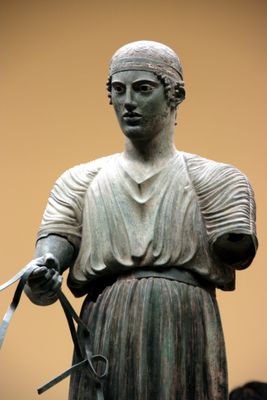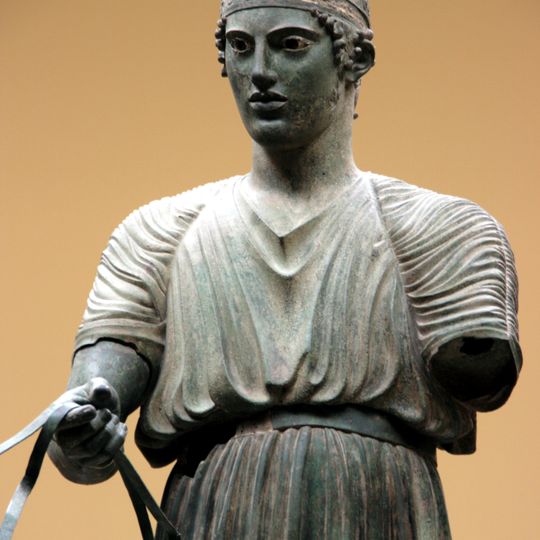
Charioteer of Delphi, Bronze statue in Delphi Archaeological Museum, Greece
The Charioteer of Delphi is a 182-centimeter (6-foot) bronze figure in the Delphi Archaeological Museum in Greece. Eyelids, lips and eyes were inlaid with copper, silver and glass, and the long racing robe wraps the body in vertical folds from the neck to the feet.
The sculpture was made around 478 BC as part of a larger monument that included a chariot, horses and at least one groom, and honored a victory at the Pythian Games. Archaeologists discovered it in 1896 under stones near the Temple of Apollo, where it had been buried after an earthquake.
The figure shows a chariot racer moments after winning at the Pythian Games, where athletes competed to honor Apollo and received laurel wreaths as prizes. The garment falls in long folds to the feet and shows how a driver looked during the formal victory ceremony.
The room in the museum allows visitors to walk around the work from all directions and also shows small details such as the inlaid eyes. Early morning or late afternoon brings fewer visitors to the hall, allowing a quieter view.
The face preserves a focused expression, with the eyes looking slightly to the side, as if the driver were still watching the finish line. The right hand once held reins that are now missing, but the position of the fingers still shows the tension of the race.
The community of curious travelers
AroundUs brings together thousands of curated places, local tips, and hidden gems, enriched daily by 91,135 contributors worldwide.