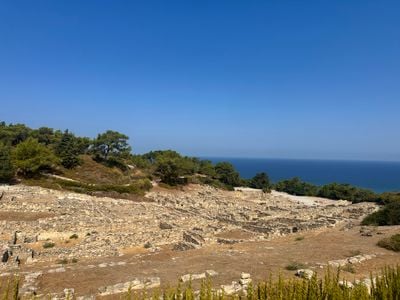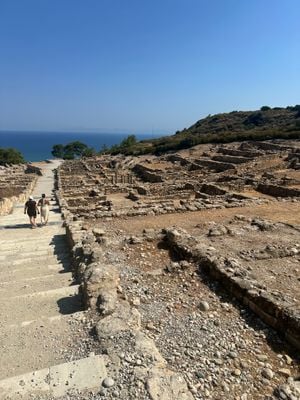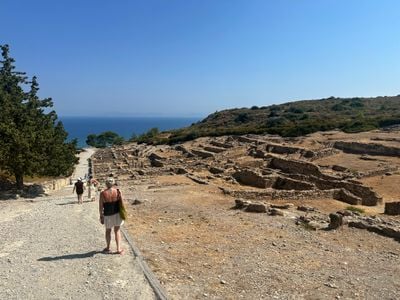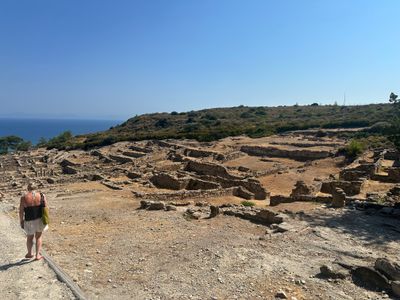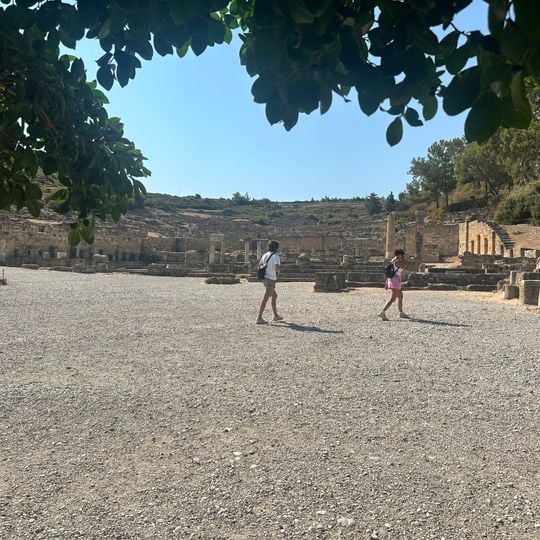
Kameiros, Ancient Greek archaeological site in Kalavarda, Greece
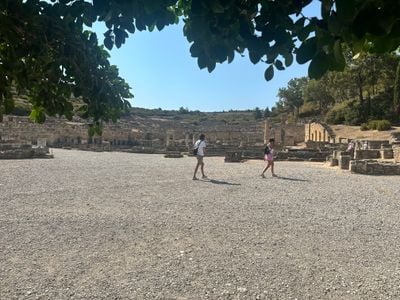
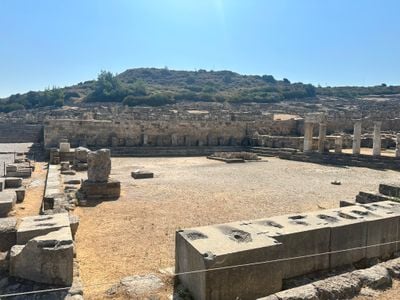
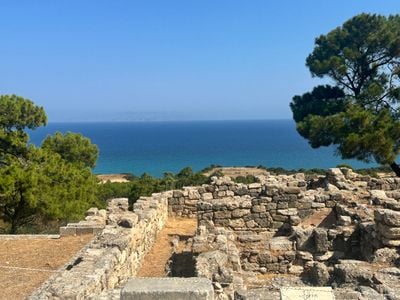
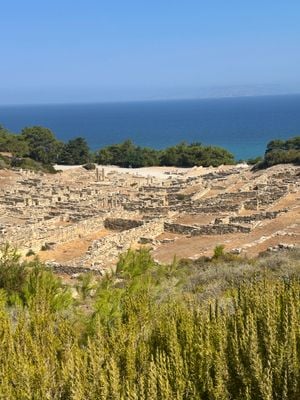
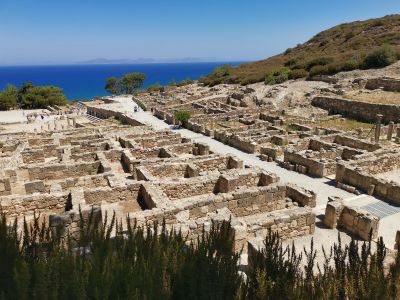
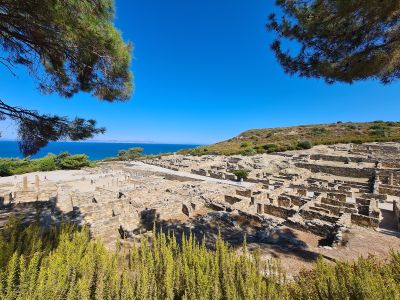
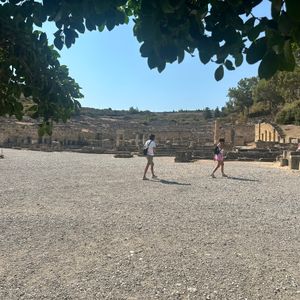
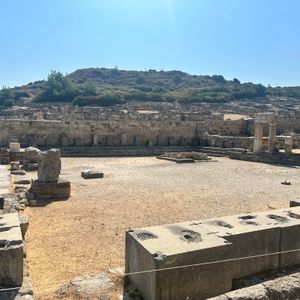
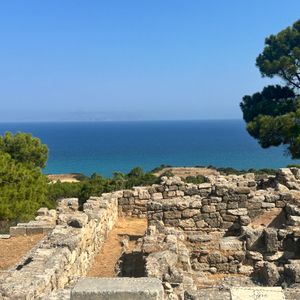
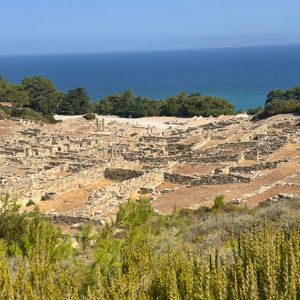
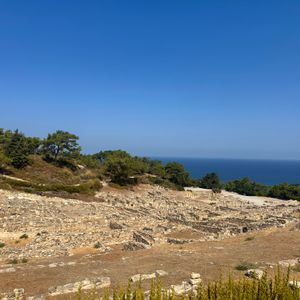
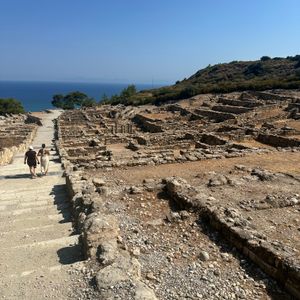
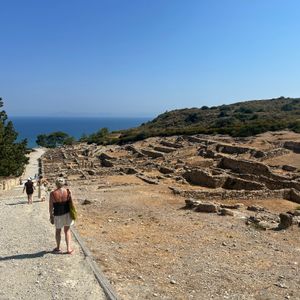
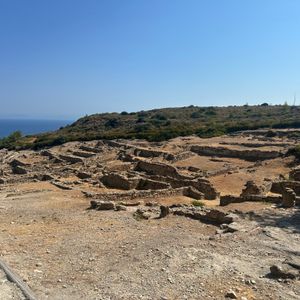
Kameiros is an ancient Greek city on the western coast of Rhodes, built across three terraced levels that rise from a lower civic area up through residential streets to an acropolis with temples at the top. Streets, house foundations, and a water distribution network from the Hellenistic period are still visible across the site.
The site began as a Mycenaean settlement and later became a Dorian city that grew steadily from the 8th century BC onward. Its decline came after a major earthquake in 226 BC and the growing dominance of the newly founded city of Rhodes, which drew population and trade away from older centers.
Kameiros took its name from the fig leaf on its 6th-century BC coins, one of the agricultural products that made the city wealthy. Homer called its territory "arginoinonta", the white soil, a reference to the fertile clay ground. Excavated finds, including pottery from the Fikelloura cemetery, are now mostly in the British Museum.
The site is on the western coast of Rhodes and is easiest to visit in the morning, before the heat of the day builds up. The three levels are connected by uneven paths and ancient stone steps, so wear shoes with a good grip.
The covered reservoir on the acropolis held about 600 cubic metres of water, enough for some 400 families, and was built around the 6th century BC; the stoa was later raised over it. The stoa itself ran 204 metres with two rows of Doric columns and shops or lodgings behind.
The community of curious travelers
AroundUs brings together thousands of curated places, local tips, and hidden gems, enriched daily by 94,036 contributors worldwide.