Idaean Cave, Sacred cave in Mount Ida, Crete, Greece
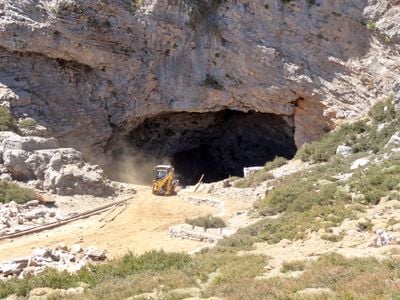
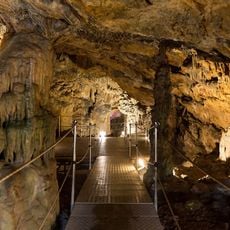
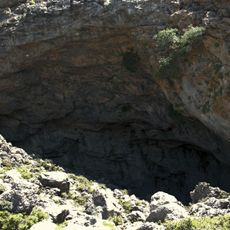
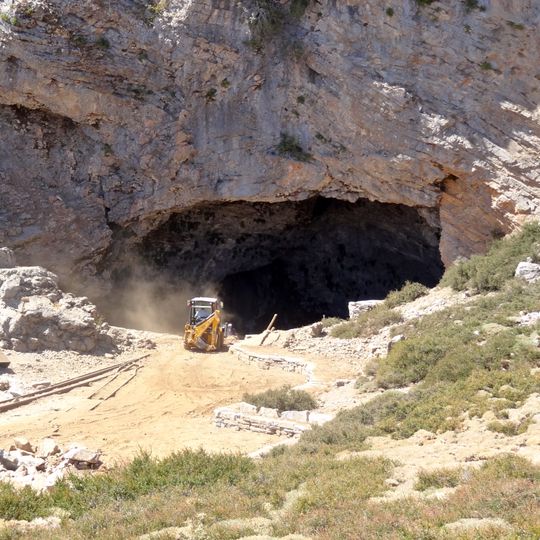
The Idaean Cave opens on the slopes of Mount Ida as a single entrance in pale grey and tan limestone, its rim a broad, fractured arch with dark vegetation growing from the cracks above. Inside, the cave is deep and descends steeply, with traces of a rock-cut stair leading down to a pool from which stalactites rise. A flat floor of light tan dirt runs out from the mouth, where loose stones and low scrub lie at the edges.
The cave system has been used since the Bronze Age and grew into an important sanctuary during ancient times. Archaeological excavations in the 20th century uncovered artifacts spanning multiple millennia.
The cave's name comes from the myth that Rhea hid the infant Zeus here from Cronos; a variant says the Curetes danced noisily outside to drown out his cries. Excavations in the 1930s by Kunze found votive shields and ivories of the 8th and 7th centuries BC, including a bronze shield showing an Assyrian-style Master of Animals.
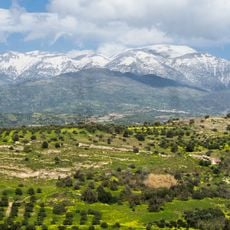
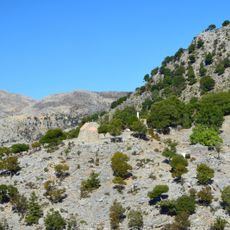
The cave lies on the slopes of Mount Ida, reached on foot from the village of Idaean Andros; the walk up is steep and the path rocky. The single entrance leads into a deep chamber where the floor is uneven and damp near the stalagmites. Bring a jacket, since the interior stays cool even in summer.
Among the votive finds from the cave is a single bronze leg, a body-part offering that has no parallel in any other sacred cave. Excavations also produced an uncommon quantity of semi-precious stones, including carnelian, amethyst, jasper and hematite. The artefacts are now held in the Heraklion Museum, the Ashmolean, the Louvre and the British Museum.
The community of curious travelers
AroundUs brings together thousands of curated places, local tips, and hidden gems, enriched daily by 94,027 contributors worldwide.