Kamares Cave, Sacred cave on Mount Psiloritis near Kamares, Greece
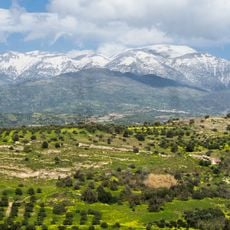
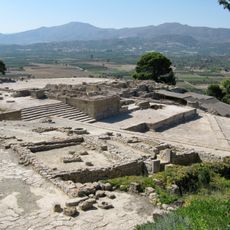
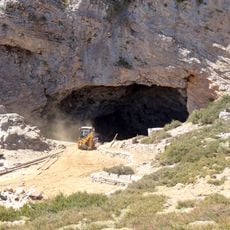
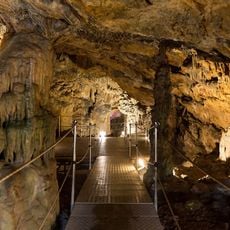
Kamares Cave lies at 1,524 metres on the south slope of Psiloritis, below the Marvi peak (1,981 m). Its opening is 42 metres wide and 20 metres high, visible from the Messara plain and ancient Phaistos. In front is a 50-metre-wide, 30-metre-deep terrace where Antonio Taramelli suspected a sacrificial altar. The front section is about 100 metres long and drops 40 metres; a one-metre passage leads to a dark 10-metre-high gallery ending in a hall with a small pond.
In 1890 a farmer from Kamares brought Iosif Chatzidakis potsherds of a fine pottery type not yet documented on Crete, which he had picked up in the cave. Antonio Taramelli visited in 1894, and Richard MacGillivray Dawkins and Max L. W. Laistner excavated systematically in 1913. In 2006 Aleydis Van De Moortel analysed all the cave's pottery and showed it was already heavily used in the Prepalatial period; finds span roughly 3000 to 1100 BC.
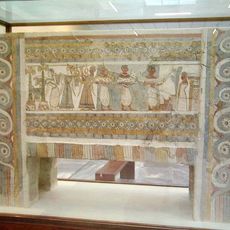
The cave gave its name to Kamares ware, first identified here after a farmer brought sherds to the doctor and archaeologist Iosif Chatzidakis in 1890. The style, with white and red ornament on a dark glossy slip, peaked around 1800–1700 BC; the finest pieces are displayed in the Archaeological Museum of Heraklion.
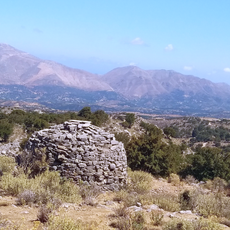
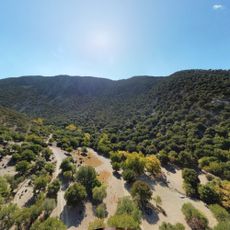
The ascent to the cave requires a several-hour hike through wooded areas with natural springs along the way. Visitors should bring sturdy footwear and adequate water, as the route is steep and offers limited shade.
The cave's pottery was first reported in 1890, when a farmer from Kamares handed sherds of a fine ware then unknown on Crete to the doctor and archaeologist Iosif Chatzidakis. The style was named Kamares ware after this find, and the pieces are now in the Heraklion Archaeological Museum.
The community of curious travelers
AroundUs brings together thousands of curated places, local tips, and hidden gems, enriched daily by 94,195 contributors worldwide.