Koumasa, Archaeological site in Gortyn Municipality, Greece
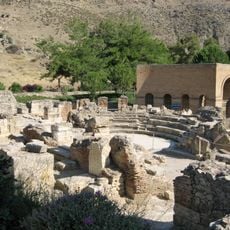
Koumasa is an archaeological site in Gortyn Municipality featuring the remains of building foundations, burial chambers, and objects from multiple ancient periods. The finds come mainly from the Minoan era and show how people lived here continuously over many generations.
Stephanos Xanthoudides excavated the cemetery in 1904–1906 and published the finds in The Vaulted Tombs of Mesara; the site was later robbed. Alexandra Karetsou and Athanasia Kanta resumed work in 1991–1992, and since 2012 Heidelberg University, led by Diamantis Panagiotopoulos, has uncovered settlement layers from the Protopalatial to the Neopalatial period.
The burial chambers reveal how early inhabitants honored their dead and what rituals held meaning for them. Walking through the site, you notice how these practices tell us about community bonds and shared beliefs.
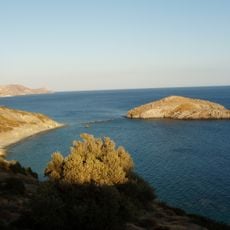
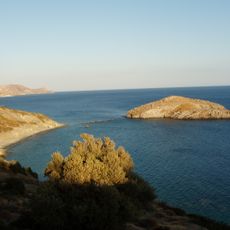
The site lies between the villages of Loukia and Koumasa, at the southern edge of the Mesara Plain below the Asterousia Mountains. The excavated tombs and settlement remains are on the saddle of Korakies hill, reached on foot over open ground; wear sturdy shoes and allow time to walk between the scattered structures.
What sets this place apart is the variety of tomb types found here, showing that some families had individual burials while others shared communal graves. This mix gives rare insight into the social differences of these ancient communities.
The community of curious travelers
AroundUs brings together thousands of curated places, local tips, and hidden gems, enriched daily by 94,218 contributors worldwide.